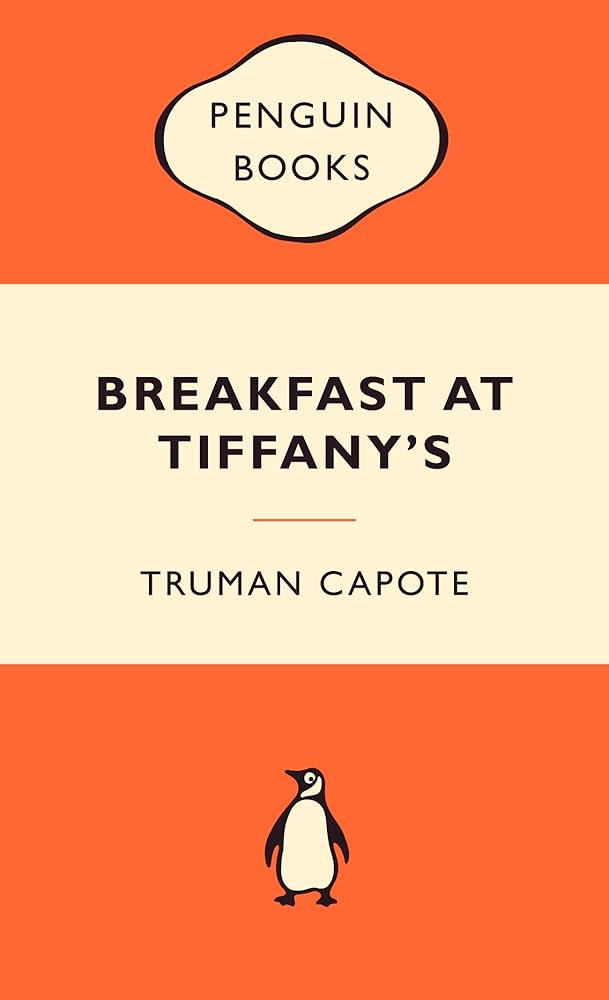

Before reading Breakfast at Tiffany’s, my only experience with Truman Capote had been In Cold Blood , a gripping, chilling true crime masterpiece that I absolutely loved. I was curious to see how his style would translate to fiction, especially in something so iconic yet completely different in tone. Originally published in 1958, Breakfast at Tiffany’s is a novella set in 1940s New York, following a young writer’s fleeting friendship with Holly Golightly, a glamorous, elusive party girl with a mysterious past. Through his eyes, we see her world unfold, filled with high-society suitors, smoky bars, and quiet moments of vulnerability behind her polished facade.
👀 First impressions:
I expected a charming, light-hearted story (likely influenced by the Audrey Hepburn film), but the book surprised me. Capote’s writing is elegant and emotionally restrained, and the story carries a quiet sadness I hadn’t anticipated. From the opening pages, I was struck by how atmospheric and nostalgic the tone was — more literary character study than romantic caper.
✅ What I Liked:
Holly Golightly is endlessly fascinating. Capote creates her as both a symbol and a person, someone who lives untethered by convention but is quietly haunted by her past. I loved how the narrator could never quite pin her down, which made her feel real and complex. The writing is absolutely gorgeous, clean and precise, yet full of warmth and melancholy. Capote manages to say so much with so little, and the themes of identity, longing, and impermanence really resonated with me.
❎ What I didn’t Like:
The novella’s brevity left me wanting more, especially in terms of character development and plot. Holly is supposed to be unknowable, but I found myself wishing for just a bit more backstory or resolution. Some of the language and depictions, especially of side characters like Mr. Yunioshi, haven’t aged well and may be uncomfortable for modern readers.
📚 Why You Should Read This Book:
If you’ve only ever seen the film, reading the novella will completely reshape your understanding of the story. Capote’s version of Holly Golightly is sharper, sadder, and far more complex than her silver-screen counterpart. This is a story about fleeting connections and the masks we wear, beautifully written and rich with quiet emotion. At under 100 pages, it’s a quick read, but one that lingers. Whether you’re a fan of classic literature, character-driven narratives, or simply appreciate elegant prose, this novella deserves a spot on your shelf.
💭 Final Thoughts:
Breakfast at Tiffany’s isn’t a love story, it’s a wistful snapshot of a singular woman and the impression she leaves behind. It’s about longing, loneliness, and the impossibility of truly knowing another person. Though it’s vastly different in tone and subject matter from In Cold Blood, Capote’s sharp observational eye and lyrical prose shine just as brightly here. I didn’t fall in love with Holly, but I was definitely haunted by her.
🛍️ Where to buy
To buy your own copy click HERE
Final Rating ★★★★☆ – Breakfast at Tiffany’s gets 4 stars for its dreamy charm and enigmatic characters, though its emotional core feels just out of reach.
 Minnie's Fiction Addiction
Leave a comment