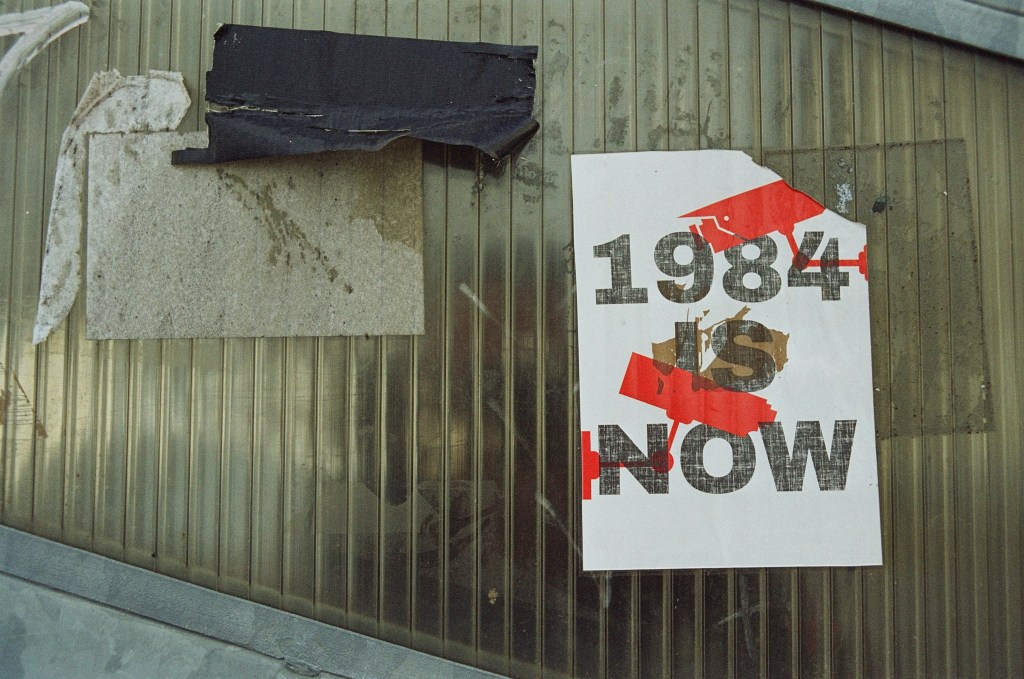
George Orwell’s 1984 is one of those rare novels that never loses its bite. First published in 1949, its vision of totalitarian control, constant surveillance, and the crushing of individuality feels unnervingly relevant no matter what decade you read it in. For many, it’s the book that sparked a love of dystopian fiction, or at least left them side-eyeing their smart speakers.
If you closed the final page of 1984 and found yourself hungry for more stories of resistance, manipulation, and futures that hit a little too close to home, here are some excellent reads to add to your list.
Brave New World by Aldous Huxley
Before Orwell imagined Big Brother, Huxley envisioned a world where control came not from fear, but from pleasure. Citizens are pacified with consumerism, shallow entertainment, and a drug called soma that keeps everyone docile. It’s a chilling counterpoint to 1984, a dystopia not of pain, but of distraction. A modern classic, it frequently appears on “Top 100 novels of all time” lists, cementing its status as one of the most influential works of the 20th century.
Fahrenheit 451 by Ray Bradbury
In Bradbury’s classic, books themselves are the enemy. Firemen don’t put out fires; they start them, burning any literature they find. What makes this one resonate with Orwell’s readers is the focus on censorship, propaganda, and the erasure of ideas. The protagonist’s awakening feels like a spark of hope in a smothered world. Fahrenheit 451 won the American Academy of Arts and Letters Award in Literature and the Commonwealth Club of California Gold Medal, and Bradbury himself later received a Pulitzer Prize Special Citation in 2007 for his distinguished career.
The Handmaid’s Tale by Margaret Atwood
Atwood’s dystopia is set in Gilead, a theocratic state where women are stripped of rights and reduced to their reproductive roles. Like Orwell, Atwood explores how authoritarian systems weaponize language, fear, and ideology to maintain control. It’s equally unsettling and unmissable. The novel won the Governor General’s Award in Canada, the first-ever Arthur C. Clarke Award, and has become a modern feminist classic, still sparking debate decades after publication.
The Power by Naomi Alderman
If you want something more contemporary, Alderman imagines a world where women develop the ability to generate electrical power, flipping the balance of society. While not a mirror of 1984, it plays with similar questions of power, corruption, and how easily structures of oppression can shift—but not disappear. The Power won the 2017 Baileys Women’s Prize for Fiction and was later adapted into an Amazon Prime series, confirming its place as one of the defining dystopias of the 21st century.
The Marriage Act by John Marrs
For a more recent dystopia with a distinctly Orwellian edge, Marrs envisions a future where the government monitors and regulates marriage to “stabilize” society. Technology, surveillance, and authoritarian overreach combine into a page-turner that feels scarily close to reality. While it hasn’t scooped major awards yet, Marrs is a Sunday Times bestselling author, and this novel has been praised for its chillingly plausible take on love, freedom, and control in a world not far removed from our own.
Final Thoughts
1984 might be the cornerstone of dystopian fiction, but it’s far from the only book exploring surveillance, censorship, and authoritarian power. Whether you’re drawn to classics like Fahrenheit 451 or want something more modern like The Marriage Act, these stories will scratch the same itch while offering fresh takes on timeless fears.
Which of these have you read, and which dystopian classics would you recommend to a fellow Orwell fan?
 Minnie's Fiction Addiction
Leave a comment