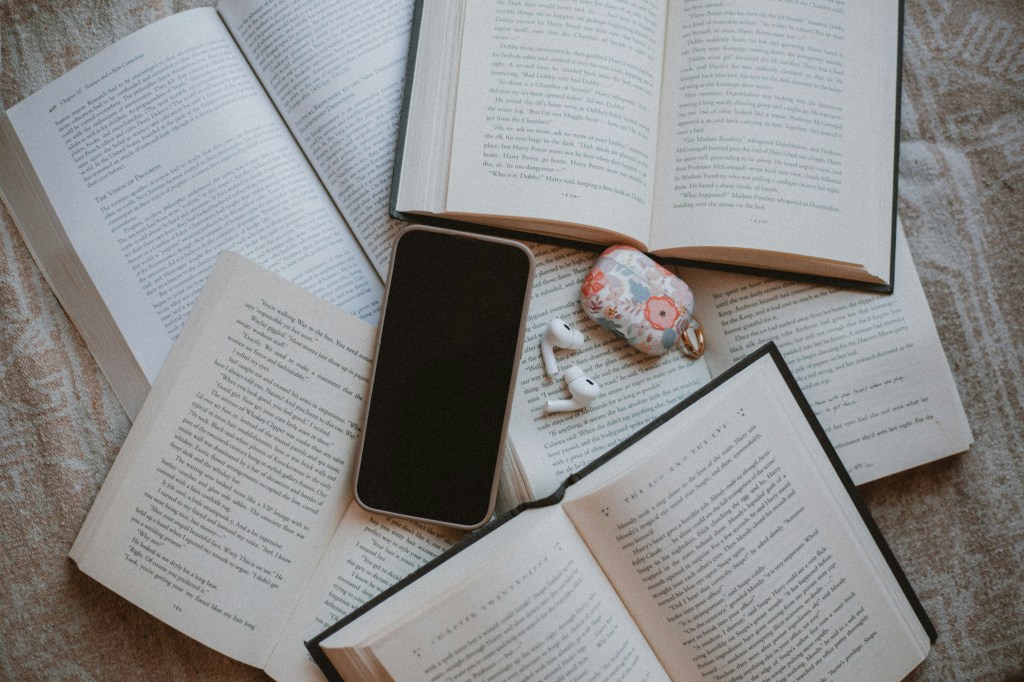
I have seven bookmarks scattered across my flat right now. One’s wedged in a thriller I’m racing through during lunch breaks, another marks my place in a dense historical biography I tackle before bed, and a third sits in the poetry collection I dip into when I need a quick mental reset. My coffee table looks like a small library explosion, and my Goodreads “currently reading” shelf is frankly embarrassing.
If you’re a fellow multi-book reader, you know the look. That slightly judgmental squint people give you when they spot your literary juggling act. “How can you possibly keep track of all those stories?” they ask, as if reading multiple books simultaneously is some sort of cognitive impossibility rather than a perfectly reasonable approach to consuming literature.
But here’s the thing: I’m not alone in this habit, and there might be more method to this apparent madness than the skeptics realize.
The Case for Chaos
Let’s be honest, reading multiple books at once can absolutely be chaotic. I’ve definitely had moments where I’ve picked up a book and spent the first five minutes trying to remember who the protagonist is or where the plot left off. There’s the awkward experience of mixing up character names from different novels, or worse, discussing the wrong book entirely in a conversation because your brain has them all tangled up.
The chaos camp has legitimate points. Single-book readers argue that diving deep into one narrative creates a more immersive experience. They can fully inhabit the author’s world, pick up on subtle character development, and maintain the emotional momentum that builds throughout a single story. There’s something to be said for that unbroken connection with a book—that feeling of being completely transported.
Plus, there’s the practical matter of completion rates. Some readers find that juggling multiple books means they’re more likely to abandon stories halfway through, distracted by the shiny appeal of their other options.
The Strategic Approach
But what if I told you that reading multiple books simultaneously isn’t just organized chaos—it’s actually a sophisticated reading strategy?
Think about how we consume other media. We don’t listen to only one song until we’ve memorized it before moving to the next. We don’t watch one TV show exclusively until it’s finished. We curate playlists, binge different series, and mix up our entertainment based on our mood, energy level, and available time. Why should books be any different?
Mood-Based Reading
The strongest argument for multi-book reading is the mood factor. Sometimes you’re in the headspace for literary fiction that makes you contemplate existence, and sometimes you just want a fantasy hero to slay a dragon. Having multiple books in rotation means you can match your reading to your mental state, which often leads to a more satisfying experience overall.
I keep what I call my “ecosystem” of books: something light for tired evenings, something substantial for focused weekend reading, something educational for when I want to learn, and something comforting for when the world feels overwhelming. It’s like having the right tool for every job.
Genre Cleansing
Multi-book reading also prevents genre fatigue. If you’ve ever tried to read three fantasy novels back-to-back, you know how the magic systems and medieval politics can start to blur together. Rotating between genres keeps each one feeling fresh. The scientific precision of a well-researched non-fiction book makes returning to the creativity of fiction feel like a treat, and vice versa.
Time Optimization
From a practical standpoint, different books work better for different situations. That 800-page Russian novel might be perfect for a quiet Sunday afternoon, but it’s not ideal for your 15-minute commute. Having a shorter, more digestible book for those in-between moments means you’re maximizing your reading time instead of scrolling through your phone.
The Science of Scattered Reading
Surprisingly, there might be cognitive benefits to reading multiple books at once. Some research suggests that switching between different types of content can actually improve comprehension and retention. The mental effort required to context-switch between narratives might strengthen the brain’s ability to compartmentalize and organize information.
There’s also the spacing effect to consider, the psychological phenomenon where we remember information better when we encounter it repeatedly over spaced intervals. When you put a book down for a few days and return to it, you’re essentially creating those spaced repetitions with the characters, themes, and plot points.
Making Multi-Book Reading Work
If you’re curious about joining the ranks of multi-book readers, here are some strategies that can help minimize the chaos and maximize the benefits:
Create Clear Distinctions
Choose books that are sufficiently different from each other. Don’t read three psychological thrillers simultaneously, your brain will thank you. Mix genres, time periods, writing styles, and formats. I like to have one fiction and one non-fiction going at minimum, often with different formats (physical book vs. audiobook vs. e-reader) to create stronger mental associations.
Designate Reading Locations
Physical cues can help your brain switch between books. Keep your bedtime book on the nightstand, your commute book in your bag, and your weekend deep-read on the coffee table. The environmental context helps trigger which story you’re entering.
Take Notes
This doesn’t have to be extensive, even just jotting down character names and basic plot points can help you jump back into a story after a few days away. Some readers use bookmarks with notes, others prefer apps designed for tracking multiple reads.
Don’t Force It
Some books demand exclusive attention, and that’s okay. If you find yourself completely absorbed in one story, give in to that experience. Multi-book reading should enhance your reading life, not constrain it.
The Verdict
Reading multiple books at once isn’t for everyone, and it doesn’t have to be. Some readers genuinely prefer the deep dive approach, and there’s absolutely nothing wrong with that. But for those of us who find ourselves naturally gravitating toward multiple stories, it’s worth embracing rather than fighting.
The key is being intentional about it. Random chaos, grabbing whatever book is closest regardless of your mood or situation, probably won’t serve you well. But strategic multi-book reading? That can open up new dimensions to your reading life.
At its best, reading multiple books simultaneously mirrors how we actually live: complex, multifaceted, and constantly shifting between different needs and interests. Maybe the real question isn’t whether we should read multiple books at once, but why we ever thought we should limit ourselves to just one story at a time.
After all, life is big enough for multiple narratives. Why shouldn’t our reading lives be the same?
What’s your take, are you team single-book or team multi-book? Have you found strategies that work for managing multiple reads, or do you prefer the focused approach? I’d love to hear about your reading habits in the comments
 Minnie's Fiction Addiction
Leave a comment