
👀 First impressions:
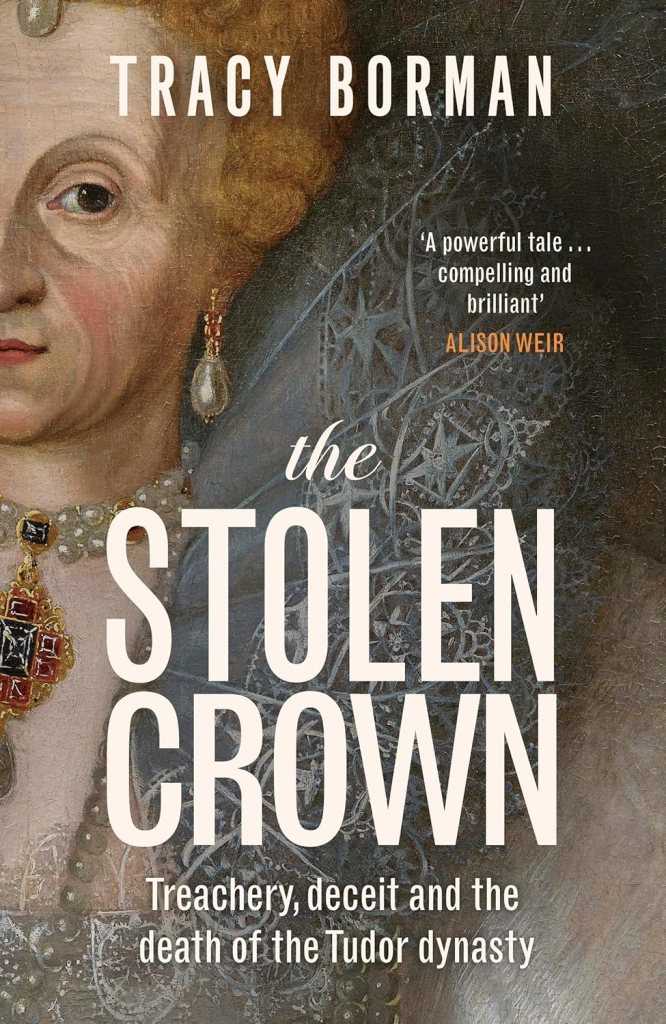
The Stolen Crown opens in March 1603, with Queen Elizabeth I dying at Richmond Palace and the future of England hanging in the balance. Popular history has long insisted that Elizabeth named James VI of Scotland as her successor with her final breath, smoothing the transition from Tudor to Stuart rule. Tracy Borman challenges this familiar narrative, arguing that Elizabeth never formally named an heir at all. What follows is a fascinating investigation into how this carefully constructed myth took hold, and how its consequences helped plunge Britain into decades of instability, fear and violence.
✅ What I Liked:
Tracy Borman excels at dismantling accepted historical stories and rebuilding them with clarity and drama. Her research is meticulous, yet the writing remains vivid and accessible, bringing court politics and personal ambition sharply into focus. The book is particularly strong in showing how uncertainty at the top of power filters down into paranoia, persecution and unrest, from religious division to witchcraft trials and the Gunpowder Plot. Borman has a talent for revealing how much of history is shaped by what people need to believe rather than what can be proven.
❎ What I didn’t Like:
At times, the density of political manoeuvring and shifting alliances can feel overwhelming, especially for readers less familiar with late Tudor and early Stuart history. The focus remains firmly on elite power structures, which means everyday experiences of ordinary people are largely glimpsed through consequence rather than direct narrative.
📚 Why You Should Read This Book:
If you enjoy revisionist history that challenges long held assumptions, this is an excellent read. It will appeal particularly to readers interested in Tudor and Stuart Britain, succession politics and the fragile nature of political legitimacy. This book rewards curiosity and attention, offering a fresh perspective on a moment often treated as settled fact.
💭 Final Thoughts:
The Stolen Crown is a compelling reminder that history is often shaped by uncertainty, omission and deliberate myth making. Tracy Borman turns a familiar succession story into a tense and thought provoking narrative about power and its fallout. Informative, provocative and highly readable, it reshapes how the end of the Tudor era is understood.
🛍️ Where to buy
To buy your own copy click HERE and HERE
Final Rating ★★★★ – Revisionist history that makes the past feel urgently alive
 Minnie's Fiction Addiction
Leave a comment