
👀 First impressions:
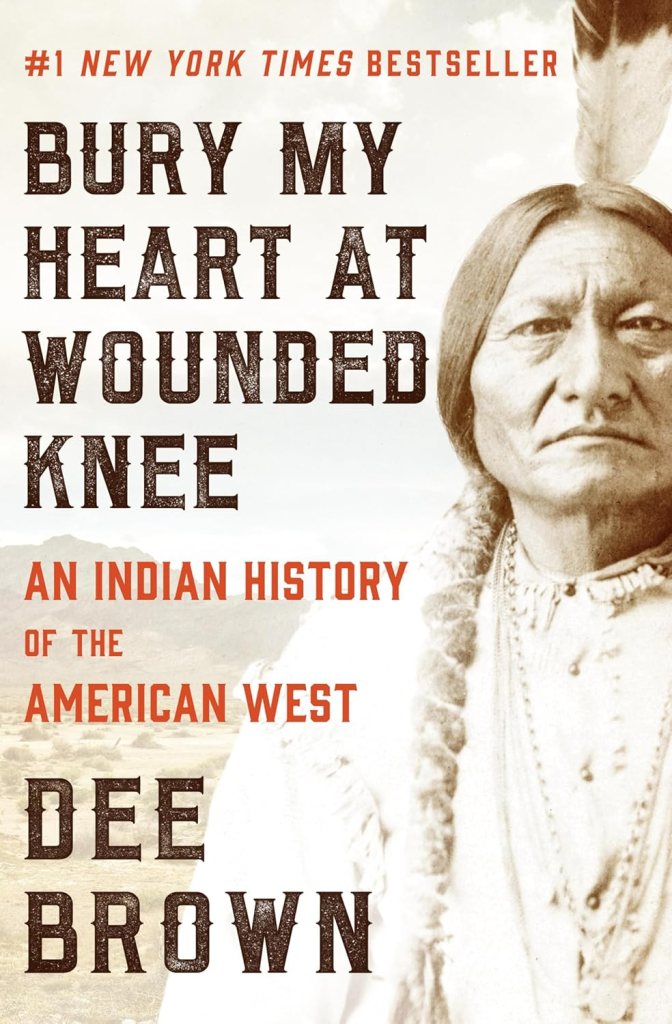
This has been one of those books sitting on my “to read” list for years, and I was lucky enough to stumble across a copy in a charity shop. First published in 1970, Bury My Heart at Wounded Knee quickly became one of the most significant works of American history ever written. Dee Brown, a librarian and historian, set out to tell the story of westward expansion from the perspective of Native Americans, using government documents, council records, and eyewitness testimony. Instead of a triumphant narrative of settlers, pioneers, and “manifest destiny,” Brown uncovers the broken treaties, massacres, and cultural devastation inflicted upon Native peoples from the 1860s through to the 1890 Wounded Knee Massacre. It’s a heavy, detailed, and unflinching account that changed how history was written and remembered.
✅ What I Liked:
What struck me most was the way Brown shifted the perspective. By writing from Native viewpoints, he highlighted chiefs, warriors, and communities often erased from mainstream history, giving them back their voices. The depth of research is also impressive, with primary sources woven into the narrative in a way that feels authentic, immediate, and painfully real. I also appreciated the structure, which moves tribe by tribe and incident by incident, slowly building a devastating cumulative picture rather than presenting isolated tragedies. Although it is nonfiction, the prose often carries the weight of a tragic epic, which makes it engaging while still rooted firmly in fact.
❎ What I didn’t Like:
This is not light reading, and the sheer repetition of betrayal, broken treaties, and massacres can feel overwhelming and emotionally exhausting. At times, the detail becomes dense, with names, dates, and places that may be difficult to follow if you are not already familiar with U.S. geography or the histories of different Native tribes. Since the book was first published in 1970, the language does not always reflect the sensitivity of more modern writing on Indigenous issues, though Brown’s intent is clearly one of respect.
📚 Why You Should Read This Book:
If you want to understand U.S. history beyond the simplified version often taught in schools, this book is essential. It reframes westward expansion not as progress but as conquest and colonisation, forcing us to reckon with the cost of that “progress.” It also influenced generations of historians and activists, becoming a landmark in Native American history writing.
💭 Final Thoughts:
Bury My Heart at Wounded Knee is not a comfortable book, nor should it be. It compels readers to face the violent displacement and attempted erasure of Native Americans in the nineteenth century. While emotionally heavy and sometimes academically dense, its historical importance and the power of its narrative make it unforgettable.
🛍️ Where to buy
To buy your own copy click HERE
Final Rating ★★★★★ – Essential, harrowing, and groundbreaking.
 Minnie's Fiction Addiction
Leave a comment