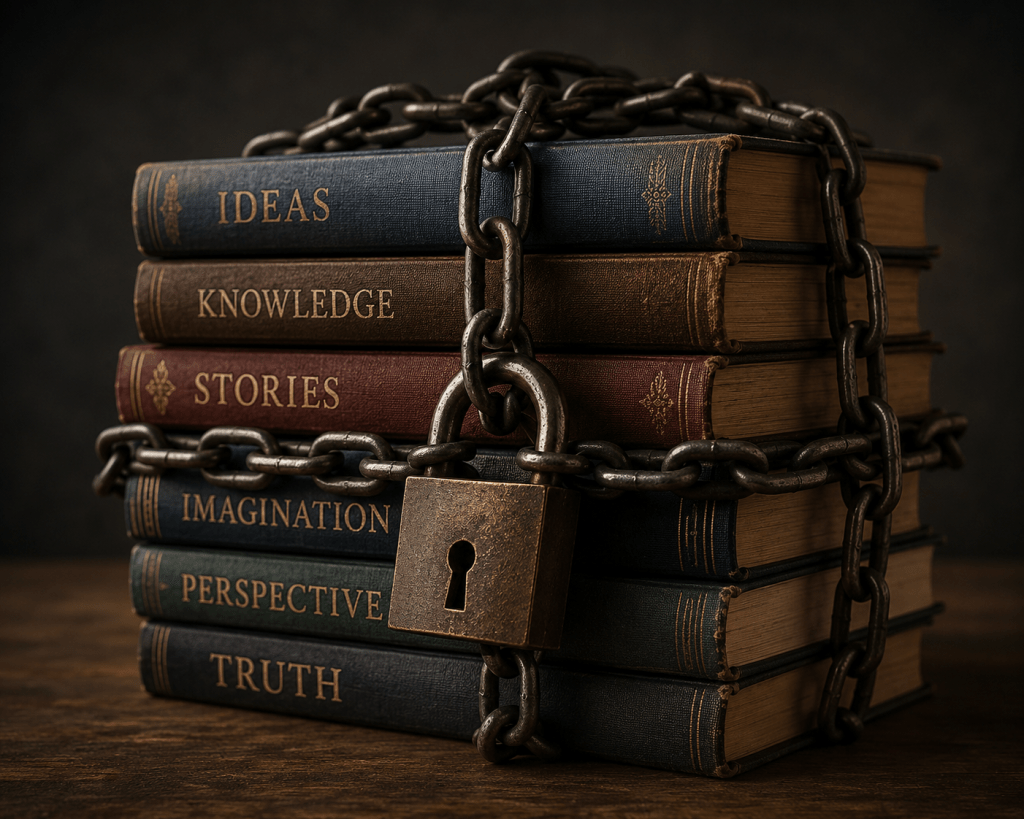
There’s a particular type of reader who loves to tell you what you shouldn’t be reading. You know the ones. They scoff at your beach reads, roll their eyes at your romance novels, and make sure everyone knows they only read “serious literature.” These are the book gatekeepers, and honestly, they’re doing more harm to reading culture than any TikTok trend ever could.
The “Real Books” Brigade
I encountered this phenomenon recently when I posted about finishing a lighthearted romantasy novel. Within minutes, someone commented that I should try reading “actual literature” if I wanted to “grow as a reader.” The implication was clear: my choice was inferior, childish even, and I was wasting my time on something that didn’t qualify as worthy.
This attitude runs deep in reading communities. Literary fiction gets praised as intellectual and meaningful. Genre fiction gets dismissed as escapist fluff. Classics are mandatory. Contemporary popular fiction is guilty pleasure territory. Self-published authors don’t count. Young adult novels are only acceptable if you’re actually young. The rules are endless, arbitrary, and frankly exhausting.
Where Does This Come From?
Literary gatekeeping isn’t new. For centuries, certain voices have decided what counts as “real” literature and what doesn’t. Academia has played its part, creating hierarchies that value certain styles, themes, and authors over others. Publishing has reinforced these divisions with marketing categories that separate “upmarket fiction” from “commercial fiction,” as if one has inherent worth and the other is simply product.
But readers have amplified this too. Goodreads reviews drip with condescension. Book Twitter erupts in judgment. Reading challenges shame participants for not picking challenging enough titles. We’ve internalised the idea that what we read reflects our intelligence, our worth, our sophistication.
The problem is that this mindset fundamentally misunderstands what reading is supposed to be.
Reading Isn’t a Competition
When did we decide that reading was about proving something? That every book had to challenge us, educate us, or demonstrate our cultural literacy? Reading serves many purposes. Sometimes it’s intellectual stimulation. Sometimes it’s emotional comfort. Sometimes it’s pure entertainment. All of these are valid.
I’ve learned as much about human nature from a well-crafted thriller as I have from celebrated literary fiction. I’ve found profound emotional truths in romance novels that so-called serious books missed entirely. I’ve been moved to tears by young adult stories that tackled grief and identity with more honesty than many adult literary darlings.
The value of a book isn’t determined by its genre, its critical acclaim, or its presence on university syllabi. The value of a book is in what it gives to its reader. And that’s different for everyone.
The Author Hierarchy
Gatekeeping doesn’t just target readers. It targets authors too. Self-published writers face constant dismissal, as if choosing indie publishing means their work is automatically inferior. Genre authors get treated as lesser than their literary counterparts, regardless of their skill or success. Female authors, particularly those writing romance or women’s fiction, face disproportionate scorn. Authors of colour often find their work either ignored entirely or tokenised.
I’ve watched debut authors get torn apart by readers who seem to forget that real people wrote these books. I’ve seen established authors in commercial genres patronised by critics who would never dream of reading their work but feel qualified to judge it anyway. The message is clear: some authors matter, and some don’t.
This hierarchy hurts everyone. It discourages diverse voices. It limits what gets published. It tells aspiring writers that certain stories aren’t worth telling. And it deprives readers of discovering books that might genuinely change their lives because those books don’t fit someone else’s narrow definition of worthwhile.
The Real Threat to Reading
You know what actually threatens reading culture? It’s not people choosing romance over Dostoevsky. It’s not BookTok making novels popular. It’s not readers enjoying uncomplicated stories after exhausting days.
The real threat is making reading feel like homework. It’s creating an environment where people are afraid to share what they’re reading because someone might judge their choices. It’s prioritising perceived intellectual value over genuine engagement. It’s forgetting that the goal is to create lifelong readers, not to enforce arbitrary standards of taste.
Every time someone mocks another person’s reading choice, they’re potentially turning someone away from reading entirely. Every dismissive comment about “trashy” books or “lowbrow” fiction reinforces the idea that reading is exclusive, elitist, and not for everyone. We lose readers this way. We lose the joy that comes from discovering a story that speaks to you, regardless of whether it impresses anyone else.
What We Should Be Doing Instead
Imagine a reading culture built on curiosity instead of judgment. Where we ask “What did you love about that book?” instead of “Why are you reading that?” Where we celebrate the fact that someone is reading at all, regardless of what they’ve chosen.
We need to recognise that reading widely means reading across genres, styles, and levels of complexity. The reader who devours cosy mysteries is no less valid than the one working through modernist classics. The teenager obsessed with fantasy series is developing a reading habit that might last a lifetime. The busy parent who only has energy for light contemporary fiction is still reading, still engaging with stories, still part of our community.
We should be championing authors across all genres and publishing paths. Self-published doesn’t mean unedited or unworthy. Commercial doesn’t mean mindless. Popular doesn’t mean shallow. Some of the most skilled storytellers working today are writing in genres that literary snobs refuse to acknowledge.
My Challenge to Book Gatekeepers
The next time you feel tempted to judge someone’s reading choice, pause. Ask yourself what you’re really achieving. Are you helping that person become a better reader? Are you fostering a love of literature? Are you building an inclusive community?
Or are you just making yourself feel superior?
Because here’s the truth: your reading taste doesn’t make you special. It makes you you. And that’s all it needs to do. Let other people have their own relationships with books. Let them find joy in places you wouldn’t. Let them grow as readers in their own time and their own way.
The reading community should be the most welcoming space in the world. It should be where people come to share enthusiasm, discover new voices, and connect over stories. It should never be a place where anyone feels ashamed of what brings them happiness.
The Bottom Line
Read what you want. Read widely if that appeals to you, or stick with what you love if that’s more your style. Read challenging literary fiction. Read formulaic category romance. Read both. Read everything in between.
Support authors across all genres. Celebrate debut voices. Champion underrepresented writers. Buy indie books. Borrow from libraries. Join book clubs that respect all reading choices.
And please, stop gatekeeping. We need more readers in this world, not fewer. We need more people falling in love with stories. We need more voices, more perspectives, more books.
Let people read.

 Minnie's Fiction Addiction
Leave a comment