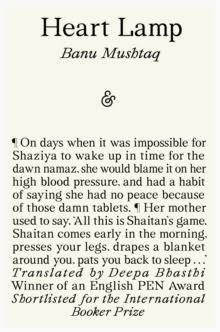

When Heart Lamp won the 2025 International Booker Prize, it made history, not only as the first Kannada-language book to be awarded, but also as the first short story collection to ever win the prize. Banu Mushtaq, an 80-year-old author and activist from Karnataka, began writing these stories over three decades ago, drawing from her experiences as a Muslim woman and an outspoken advocate for Dalit and women’s rights. The stories, translated with radical fidelity by Deepa Bhasthi, form a mosaic of everyday resistance, grief, humor, and resilience. This book is not just a literary milestone; it’s a political and cultural awakening.
👀 First impressions:
At first glance, Heart Lamp appeared deceptively quiet, short stories about rural and urban women in southern India. But by the second story, I realized I was holding something extraordinary: stories that burn softly, with slow intensity, but leave scorch marks behind. The cover, subtle and evocative, mirrors the emotional depth inside.
✅ What I Liked:
The translation is stunning, retaining Kannada, Urdu, and Arabic terms that enrich the rhythm of the text without alienating the reader. I loved the multilingual voice that didn’t pander to English but invited it to sit alongside other ways of speaking and being. The characters, especially the women, are unforgettable: weary, funny, angry, brave. Stories like “A Decision of the Heart”, where a man tries to arrange a marriage for his widowed mother, and the heartbreaking “Stone Slabs for Shaista Mahal”, show how personal decisions reflect structural violence, but with such empathy and nuance.
The feminist fire running through each story was subtle but ever-present. No grand declarations, just women finding their voice, even in defiance of their own homes, faith, and communities. The emotional honesty was refreshing. I laughed out loud in one paragraph, and in the next, I was gutted.
❎ What I didn’t Like:
If I had to nitpick, a couple of the stories toward the end felt more like vignettes than fully realized arcs, but even these offered atmosphere and texture. Readers unfamiliar with South Indian social context might need to pause occasionally to digest caste dynamics or regional references, though I never found this a flaw, just a reminder that translation isn’t always about comfort.
📚 Why You Should Read This Book:
If you love storytelling rooted in place, culture, and struggle, Heart Lamp will move you deeply. It’s for readers who crave voices from the margins, unpolished, unapologetic, and powerful. The stories transcend location, they are about women everywhere who carry unseen burdens and still keep the light on.
It’s also a must-read for anyone interested in how translation can be radical, respectful, and inventive. Deepa Bhasthi’s work here is groundbreakin
💭 Final Thoughts:
This collection was a quiet revolution. Every story added another filament to the “heart lamp”, a fragile but enduring light in the dark. It’s the kind of book I’ll press into friends’ hands and say, you need to read this. Timeless yet timely, political yet deeply personal, Heart Lamp proves that literature from so-called ‘small languages’ can carry the biggest truths.
🛍️ Where to buy
To buy your own copy click HERE
Final Rating ★★★★★ – Bold, beautiful, and burning with empathy. An unforgettable, history-making collection.
 Minnie's Fiction Addiction
Leave a comment