👀 First impressions: From the opening pages, The Unconsoled plunges you into a disorienting, dreamlike world where nothing quite makes sense. The protagonist, Ryder, a renowned pianist, arrives in an unnamed European city for a performance, but the narrative quickly dissolves into surreal encounters, impossible geography, and time that bends in inexplicable ways. It feels like being trapped in someone else’s anxiety dream, deliberately unsettling and profoundly strange.
✅ What I Liked: Ishiguro’s ambition here is undeniable. The dream logic creates an atmosphere of persistent unease that’s genuinely haunting. The way he captures the feeling of being perpetually behind, overwhelmed by others’ expectations, and unable to fulfill basic obligations resonates on a psychological level. There are moments of dark humor in the absurdity, and the novel’s exploration of artistic responsibility, memory, and emotional disconnection is thought-provoking. For readers willing to surrender to its strange rhythms, it offers a uniquely immersive, almost hypnotic experience. The writing itself remains characteristically elegant, even as the narrative spirals into chaos.
❎ What I didn’t Like: This is one of the most challenging books I’ve read. At over 500 pages, the repetitive, circular conversations and lack of forward momentum test your patience relentlessly. Ryder is a frustratingly passive, self-absorbed protagonist who stumbles through endless interruptions without agency or self-awareness. The dreamlike structure means there’s no conventional plot resolution or satisfying payoff—it simply ends without closure. The Kafkaesque absurdity that some find brilliant, others will find maddening. I found myself irritated by the constant derailments and the emotional distance from every character. This is experimental fiction at its most uncompromising, which means it often prioritizes atmosphere and psychological texture over readability.
📚 Why You Should Read This Book: You should read The Unconsoled if you’re drawn to experimental, avant-garde literature and enjoy authors like Kafka or Beckett. If you appreciate novels that capture psychological states rather than tell conventional stories, this might be for you. It’s a bold departure from Ishiguro’s other work and shows his range as a writer. However, I’d strongly advise against this as your first Ishiguro novel—try The Remains of the Day or Never Let Me Go first. This is for readers who want to be challenged, who don’t mind frustration as part of the reading experience, and who value ambitious artistic experiments even when they’re not entirely successful.
💭 Final Thoughts: The Unconsoled is genuinely divisive, even devoted Ishiguro fans are split between considering it his masterpiece or his weakest work. I land somewhere in the middle: I respect what Ishiguro was attempting and found passages genuinely affecting, but the experience was often more exhausting than rewarding. It’s a book I’m glad I read, but I can’t say I enjoyed reading it. If you’re curious about literary experimentation and have the patience for a long, strange journey that may not lead anywhere satisfying, give it a try. Just know what you’re getting into, this is less a novel and more an extended meditation on anxiety, failure, and the impossibility of meeting expectations, rendered as a waking nightmare.
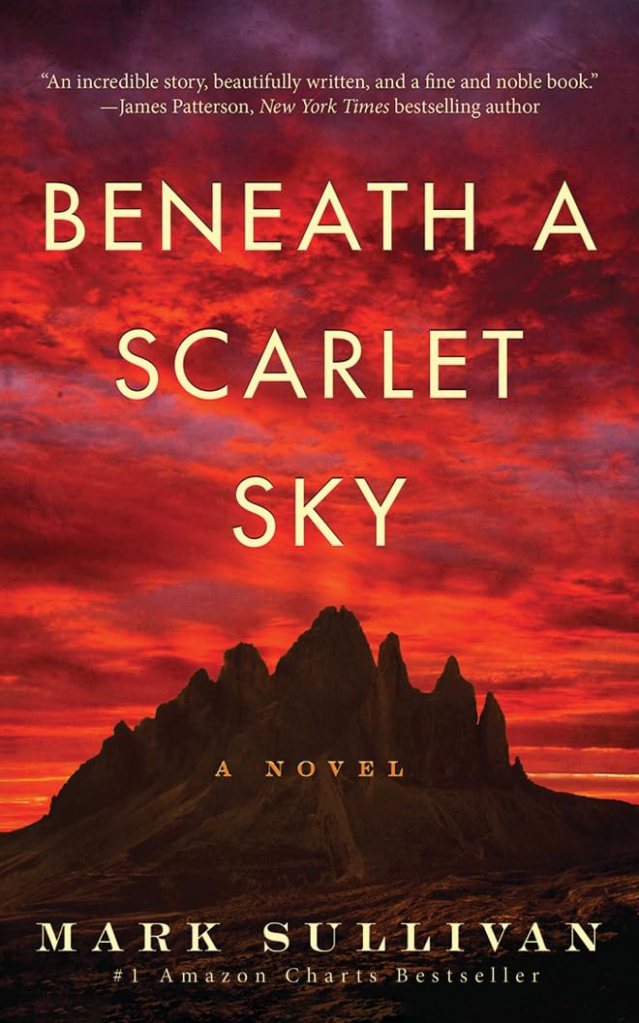
👀 First impressions: Beneath a Scarlet Sky is based on the extraordinary true story of Pino Lella, a young Italian who becomes involved in the resistance during World War II. I was drawn to this book because it promised to explore a part of history we don’t often see in fiction, the Italian perspective of the war. First published in 2017, it became a bestseller thanks to word of mouth, book clubs, and its blend of history and human drama. From the opening pages, it’s clear that this is not only a story of survival but also of courage, sacrifice, and the quiet heroism of ordinary people.
✅ What I Liked: The strongest part of the novel is its subject matter. Pino’s journey, from helping Jews escape across the Alps, to becoming the driver for a Nazi general, reads like something from a film, yet it’s rooted in fact. I appreciated how Sullivan highlighted the bravery of a teenager forced to make impossible choices in the face of unimaginable danger. The descriptions of Italy’s landscapes—the mountains, the ruined cities, the everyday lives disrupted by war—were vivid and cinematic. It’s also a deeply emotional read; Pino’s love story with Anna added a tender thread of humanity amidst the brutality of war.
❎ What I didn’t Like: At times, the writing itself felt uneven. The story is so remarkable that it sometimes outshines the prose, which can veer into clunky or straightforward rather than lyrical. Some of the dialogue didn’t always feel natural, and occasionally I wanted more depth to the characters beyond their actions. Still, the sheer power of Pino’s story carried me through.
📚 Why You Should Read This Book: If you enjoy historical fiction that sheds light on lesser-known aspects of World War II, this is a must-read. It’s the kind of story that makes you pause and wonder why we haven’t heard more about heroes like Pino. Fans of The Nightingale by Kristin Hannah or All the Light We Cannot See by Anthony Doerr will find much to admire here.
💭 Final Thoughts: Beneath a Scarlet Sky is one of those novels where the true story is so compelling, it almost doesn’t matter if the writing style isn’t perfect. It reminded me that even in the darkest times, acts of bravery and love can shine through. I came away moved, informed, and with a greater appreciation of a forgotten corner of history.
🛍️ Where to buy To buy your own copy click HERE of HERE
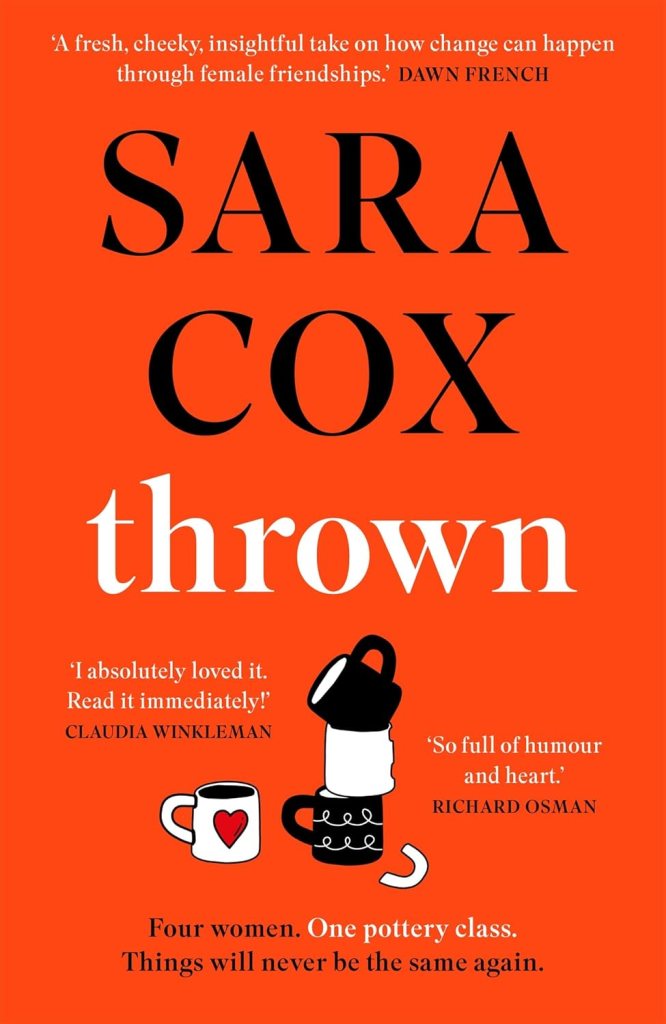
👀 First impressions: Thrown by Sara Cox is her debut novel, a charming slice of life set around a pottery class in a small northern town. I’ve been listening to Sara on the radio for years, her warmth and humour have always made her one of my favourites, and I was curious to see how that translated onto the page. She also presents a book show on the BBC, so it felt natural that she’d eventually bring her love of stories into her own writing. From the very first chapter, it almost felt like I could hear her voice in my head narrating the story, with the same wit and friendliness she brings to the airwaves. The novel follows four very different women, Becky, Sheila, Jameela, and Connie, who come together through a local pottery class. What begins as a tentative gathering of strangers quickly becomes a tale of friendship, secrets, and second chances.
✅ What I Liked: .I loved how Cox captured the quiet bravery of ordinary lives. Each woman has her own struggles. grief, loneliness, family pressures, and yet the pottery class becomes a safe place where they can find connection. The banter felt authentic, full of Northern wit, and the descriptions of the pottery process were surprisingly soothing to read. There’s a real sense of community that shines through, and I found myself rooting for every character in their own way.
❎ What I didn’t Like: While I enjoyed each woman’s story, some threads felt stronger than others. A couple of characters had beautifully drawn arcs that really pulled me in, while others felt a little underexplored by comparison. It’s the kind of novel that shines in its group moments, but occasionally I wished for more time with the quieter voices in the mix.
📚 Why You Should Read This Book: If you like cosy, character-driven fiction in the vein of Joanna Cannon or Beth O’Leary, this book will be right up your street. It’s not just about pottery, it’s about friendship, healing, and finding joy in unexpected places. This would be a great comfort read, especially if you want something heartwarming without being too saccharine.
💭 Final Thoughts: Thrown is a lovely debut that feels grounded in real life but still manages to offer a bit of escapism. Cox has a talent for writing characters you’d happily sit and have a cup of tea with. As someone who has listened to her on the radio for years, it was a real treat to feel her voice and humour come through on the page, it made the book feel that much more personal.
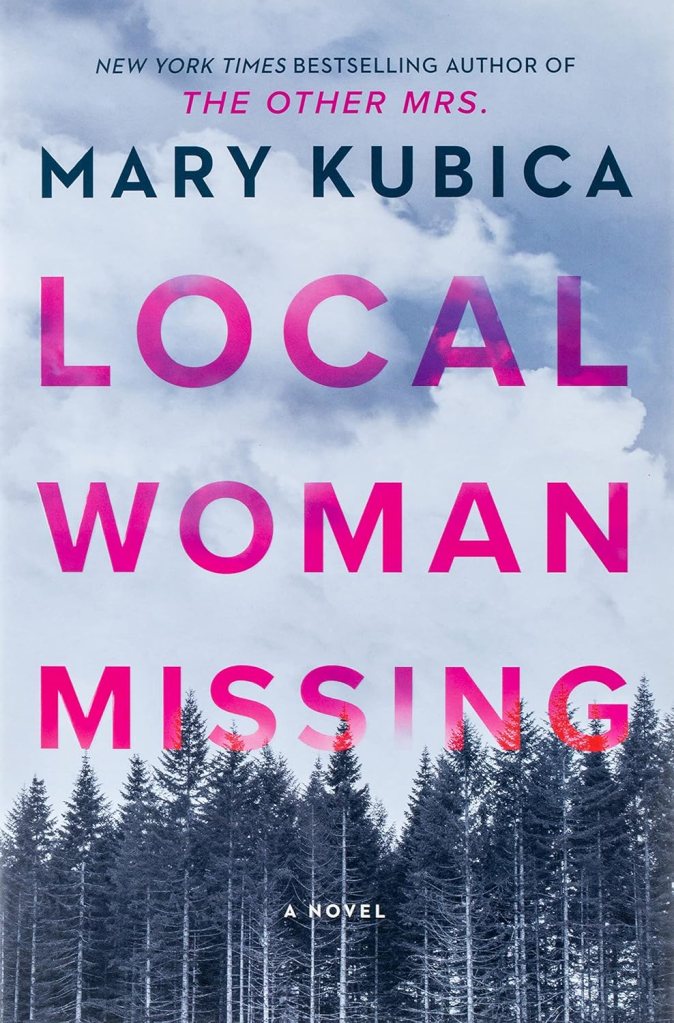
👀 First impressions: I went into Local Woman Missing expecting a twisty, small-town thriller — and Mary Kubica absolutely delivered. Set in a quiet suburb, the story follows the disappearance of two women, Shelby Tebow and Meredith Dickey, and Meredith’s six-year-old daughter, Delilah. Eleven years later, Delilah suddenly reappears, disoriented, traumatised, and silent about what happened. The book unravels the mystery through multiple timelines and narrators, including Delilah’s brother, Leo, who has grown up in the shadow of his sister’s disappearance. Kubica has a reputation for slow-burn suspense that pays off in shocking twists, and this novel fits that mould. It’s eerie, emotionally tense, and full of secrets hidden behind perfect neighborhood façades.found family.
✅ What I Liked: I loved the way Kubica wove multiple points of view and timelines together to build tension. Leo’s perspective was especially heartbreaking, adding emotional depth beyond the central mystery. The atmosphere of dread that hangs over the neighborhood is beautifully done, making every character feel a little untrustworthy. And then there’s the big twist, I won’t spoil it, but I genuinely gasped when it hit. Kubica’s reveals can sometimes be hit or miss, but this one worked for me.
❎ What I didn’t Like: The opening third of the book moves quite slowly as it sets up the characters and their world, and readers craving immediate action might struggle to stay hooked. There were also moments where character decisions stretched believability, particularly when it came to keeping secrets that could have changed everything. While the ending lands with impact, the final wrap-up felt a touch rushed after such a careful and tense build-up.
📚 Why You Should Read This Book: If you love domestic thrillers with emotional weight, secrets lurking behind closed doors, and a twist that makes you rethink everything, this one is worth picking up. It will particularly appeal to readers who enjoy authors like Lisa Jewell, Gillian Flynn, or Freida McFadden and don’t mind a story that simmers slowly before it explodes.
💭 Final Thoughts: Local Woman Missing is a dark, tense, and twist-filled ride that explores grief, family bonds, and how far people will go to protect their own. While it takes time to build momentum and asks for a bit of suspended disbelief, the payoff is satisfying and memorable.
Every so often, a book hands you a heroine who’s just… a little off. Maybe she’s morally slippery, maybe she’s socially awkward in the most watchable way, or maybe she’s just marching to the beat of her own strange little drum. Today’s picks are for readers who love a female main character who’s weird, wild, or wonderfully unpredictable.
🕵️♀️ None of This Is True — Lisa Jewell
Alix Summers, a successful true-crime podcaster, bumps into Josie Fair at a restaurant and discovers they’re “birthday twins.” Josie seems quiet and unassuming at first, but soon wriggles her way into Alix’s life, dropping unsettling hints about her past and pushing for an interview. The more Alix records, the stranger and darker Josie becomes, until the lines between storyteller and subject blur completely.
🧵 Yellowface — R.F. Kuang
June Hayward, a struggling writer, witnesses the sudden death of her far more successful friend Athena Liu, and steals Athena’s unpublished manuscript. As June rides the wave of literary fame under a new, racially ambiguous pen name, her paranoia grows. She’s defensive, delusional, and weirdly compelling, giving us a front-row seat to self-sabotage and the darkly comic side of ambition.
🎭 Bunny — Mona Awad
Samantha Mackey feels like an outsider in her ultra-elite MFA writing program, until the clique of saccharine, creepy “Bunnies” invites her into their world. Soon she’s swept into their cult-like workshops where imagination bleeds into reality, stuffed animals come to life, and art and horror mingle. Samantha herself is sharp, lonely, and increasingly unhinged in a way that’s hypnotic and strange.
🧟♀️ Plain Bad Heroines — Emily M. Danforth
Dual timelines, a cursed early-1900s girls’ school and a modern-day horror film about it, feature queer, eccentric, complicated women. The FMCs are messy, artistic, and just strange enough to keep you on edge as the book blends metafiction, satire, and haunted-house vibes.
🖤 My Year of Rest and Relaxation — Ottessa Moshfegh
The unnamed narrator has everything: beauty, money, a Manhattan apartment — and a deep desire to check out of life entirely. She embarks on a year-long experiment of drug-induced sleep, fueled by a wildly unethical psychiatrist and a nihilistic worldview. Detached, self-absorbed, and strangely magnetic, she’s a heroine who will fascinate you even as you side-eye her every choice.
💡 Final Thoughts
If you love a heroine who’s twisted, unpredictable, or just plain odd, these reads deliver. Some are darkly funny, some are eerie and atmospheric, and all of them centre women you’ll never forget, even if you’re not sure you’d want to meet them in real life.
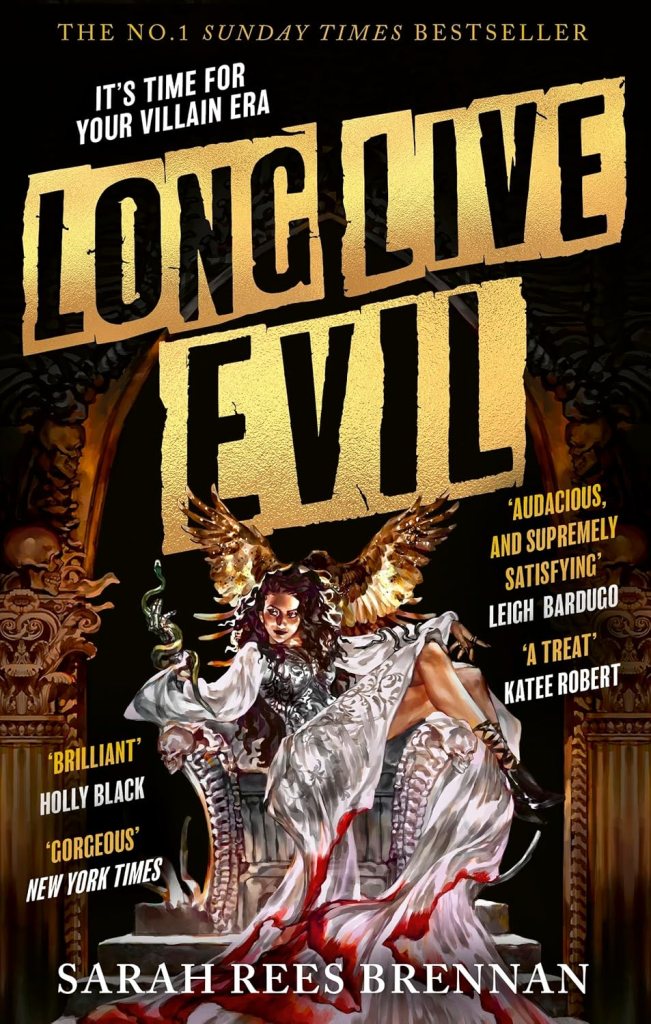
👀 First impressions: Sarah Rees Brennan is known for her witty, fast-paced writing, and Long Live Evil immediately promises a fresh spin on classic villain tropes. The premise hooked me right away: what if the so-called “bad guys” weren’t quite as evil as the stories made them seem? The title alone sets the stage for a mischievous, tongue-in-cheek look at morality, power, and rebellion. Going in, I expected a book that would both entertain and play cleverly with genre conventions.
✅ What I Liked: The strongest element here is the author’s voice, sharp, funny, and bursting with energy. Brennan has a knack for dialogue that sparkles with wit, and I often found myself smiling at the banter. The meta-commentary on villains and heroes is a highlight, making it perfect for readers who enjoy subversive takes on fantasy archetypes. There are moments of real heart beneath the humour too, and I appreciated the exploration of identity and choice.
❎ What I didn’t Like: he pacing was inconsistent. The book starts strong but sometimes gets bogged down in too much quirkiness, which pulled me out of the story. I also found the characters a little uneven, some were brilliantly vivid, while others felt underdeveloped. The constant stream of jokes, though often clever, occasionally undercut the more serious moments, leaving the emotional beats less impactful than they could have been.
📚 Why You Should Read This Book: If you love self-aware fantasy, villain-centered narratives, and witty, banter-filled prose, Long Live Evil is worth adding to your TBR. It feels especially tailored to fans of authors like Gail Carriger or Holly Black, writers who balance humor with darker edges. This isn’t a book that takes itself too seriously, and that’s part of the fun.
💭 Final Thoughts: Long Live Evil is playful, sharp, and full of clever commentary on villainy. While it doesn’t always land its tone and pacing, it offers enough charm and wit to make it an enjoyable read. A solid middle-ground novel, not a new favourite, but one I’m glad I picked up.
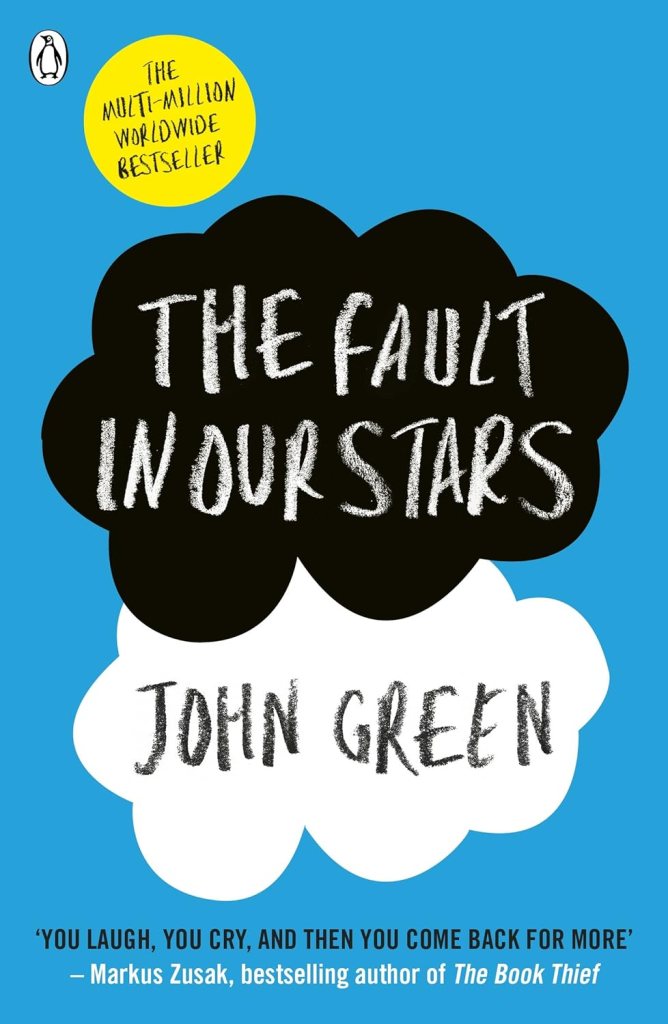
👀 First impressions: When The Fault in Our Stars was first published in 2012, it became a cultural phenomenon, topping bestseller lists and inspiring a devoted following. John Green tells the story of Hazel Grace Lancaster, a sixteen-year-old living with terminal cancer, and Augustus Waters, a witty and charismatic boy she meets at a support group. Their relationship begins cautiously before blossoming into a romance that grapples with mortality, love, and the meaning of existence. I went in expecting a witty yet heartbreaking love story, and while the novel certainly delivered emotional moments, I found myself more conflicted than moved overall.
✅ What I Liked: Hazel’s narration is clever, sharp, and often darkly funny, which helps the book avoid becoming overly sentimental. Her relationship with Augustus has moments of warmth and authenticity, with their banter providing levity against the heavy backdrop of illness. Green deserves credit for tackling themes of death and legacy in a way that’s accessible to a YA audience, and the novel does deliver a few passages that feel profound and worth lingering over.
❎ What I didn’t Like: Despite its strengths, there were times when the characters felt more like vehicles for philosophy than real teenagers. The dialogue, while witty, often struck me as too polished and self-aware, which broke the immersion. Some of the novel’s musings on life and death felt forced, as though they were written with the intention of being quoted rather than experienced naturally within the story. By the end, I felt more aware of the book’s construction than fully immersed in Hazel and Augustus’ world, which weakened the overall emotional impact for me.
📚 Why You Should Read This Book: If you’re drawn to stories that mix humor with heartbreak, this book is still worth reading. It speaks to themes of love, mortality, and the search for meaning in a way that resonates with many readers, particularly those who enjoy contemporary YA fiction. Even if it didn’t entirely work for me, I can see why it struck such a chord with so many people.
💭 Final Thoughts: The Fault in Our Stars is a novel that aims to be both heartbreaking and life-affirming, and for many, it succeeds. For me, the sharp wit and emotional storyline were undermined by characters who sometimes felt too carefully crafted to be real. It’s a book that lingers, but not always for the reasons intended, leaving me with admiration for its ambition but only a lukewarm connection to the story itself.
Some readers treat their books like sacred objects, carefully preserved and kept spotless. Others see the margins as blank space begging to be filled with thoughts, doodles, and underlines. The question is: do you annotate, or do you keep your books pristine?
Minnie: Team Annotator ✏️📚
Books aren’t museum pieces. They’re companions. And companions should carry the marks of your journey together.
When I annotate, I’m having a conversation with the text. I underline the sentences that make me gasp, I scribble hearts next to lines that break me, I argue in the margins when I disagree. Later, flipping back through, it’s like revisiting old diary entries, a record of how I felt in that exact moment.
A pristine book might be pretty, but an annotated one is alive. It holds not just the author’s words, but mine too. It’s a time capsule of my thoughts, a map of my emotional journey through the story.
So yes, my books are messy. They’re dog-eared, highlighted, covered in ink. But they’re also uniquely mine.
Tess: Team Pristine Collector ✨📚
Books are art. And you don’t scribble all over a painting.
For me, part of the joy of reading is holding something beautiful in my hands — crisp pages, unbroken spines, a cover that looks as perfect as the day I bought it. Annotating feels like defacing that beauty. Once you’ve written in it, you can’t go back.
A book in pristine condition can be loaned to a friend, displayed proudly on a shelf, or sold and passed on to another reader. A book filled with someone else’s underlines and notes? It’s cluttered, distracting, and ruins the reading experience.
I don’t need to see my reactions in the margins to remember how a story made me feel. The book itself is enough. For me, respecting the author’s words means leaving the pages untouched.
Final Thoughts
Minnie turns books into personal journals, layering her own story on top of the author’s. Tess treats them as treasures to be preserved, artifacts of the author’s vision. Neither approach is wrong — it all comes down to whether you want your books to reflect just the author, or a little bit of yourself too.
About the Writers
Minnie is a chaotic mood reader who loves annotating her books with doodles, hearts, and sarcastic margin notes. For her, a well-loved book is one with bent spines and ink-stained pages.
Tess is a disciplined list-maker and proud book collector. She believes books deserve to be kept flawless, and the sharp crack of a brand-new spine is one of her favorite sounds.
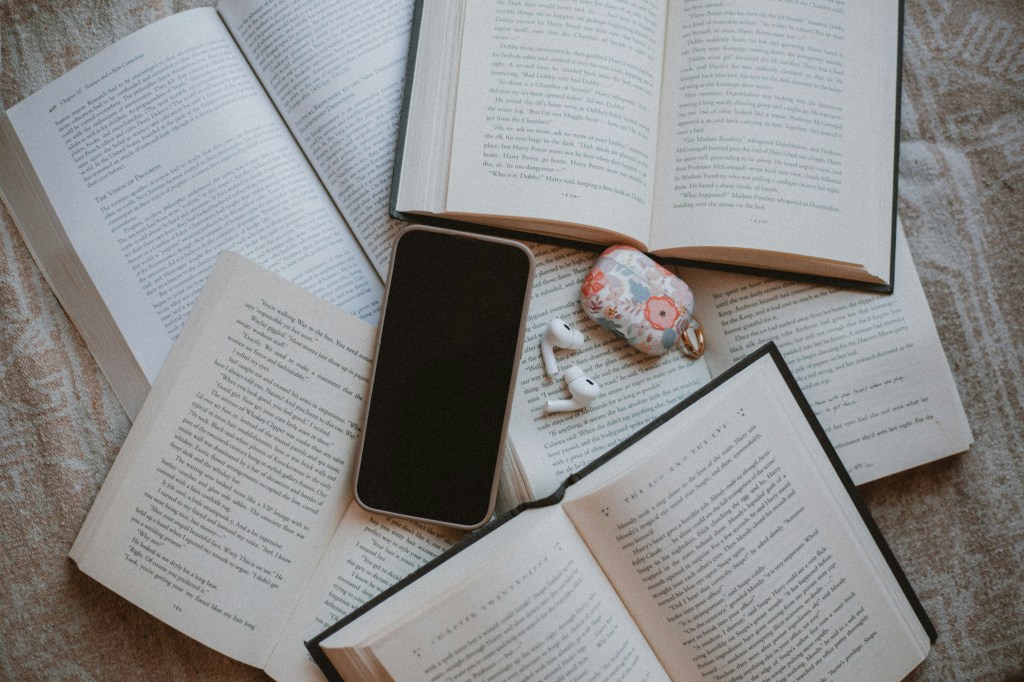
I have seven bookmarks scattered across my flat right now. One’s wedged in a thriller I’m racing through during lunch breaks, another marks my place in a dense historical biography I tackle before bed, and a third sits in the poetry collection I dip into when I need a quick mental reset. My coffee table looks like a small library explosion, and my Goodreads “currently reading” shelf is frankly embarrassing.
If you’re a fellow multi-book reader, you know the look. That slightly judgmental squint people give you when they spot your literary juggling act. “How can you possibly keep track of all those stories?” they ask, as if reading multiple books simultaneously is some sort of cognitive impossibility rather than a perfectly reasonable approach to consuming literature.
But here’s the thing: I’m not alone in this habit, and there might be more method to this apparent madness than the skeptics realize.
The Case for Chaos
Let’s be honest, reading multiple books at once can absolutely be chaotic. I’ve definitely had moments where I’ve picked up a book and spent the first five minutes trying to remember who the protagonist is or where the plot left off. There’s the awkward experience of mixing up character names from different novels, or worse, discussing the wrong book entirely in a conversation because your brain has them all tangled up.
The chaos camp has legitimate points. Single-book readers argue that diving deep into one narrative creates a more immersive experience. They can fully inhabit the author’s world, pick up on subtle character development, and maintain the emotional momentum that builds throughout a single story. There’s something to be said for that unbroken connection with a book—that feeling of being completely transported.
Plus, there’s the practical matter of completion rates. Some readers find that juggling multiple books means they’re more likely to abandon stories halfway through, distracted by the shiny appeal of their other options.
The Strategic Approach
But what if I told you that reading multiple books simultaneously isn’t just organized chaos—it’s actually a sophisticated reading strategy?
Think about how we consume other media. We don’t listen to only one song until we’ve memorized it before moving to the next. We don’t watch one TV show exclusively until it’s finished. We curate playlists, binge different series, and mix up our entertainment based on our mood, energy level, and available time. Why should books be any different?
Mood-Based Reading
The strongest argument for multi-book reading is the mood factor. Sometimes you’re in the headspace for literary fiction that makes you contemplate existence, and sometimes you just want a fantasy hero to slay a dragon. Having multiple books in rotation means you can match your reading to your mental state, which often leads to a more satisfying experience overall.
I keep what I call my “ecosystem” of books: something light for tired evenings, something substantial for focused weekend reading, something educational for when I want to learn, and something comforting for when the world feels overwhelming. It’s like having the right tool for every job.
Genre Cleansing
Multi-book reading also prevents genre fatigue. If you’ve ever tried to read three fantasy novels back-to-back, you know how the magic systems and medieval politics can start to blur together. Rotating between genres keeps each one feeling fresh. The scientific precision of a well-researched non-fiction book makes returning to the creativity of fiction feel like a treat, and vice versa.
Time Optimization
From a practical standpoint, different books work better for different situations. That 800-page Russian novel might be perfect for a quiet Sunday afternoon, but it’s not ideal for your 15-minute commute. Having a shorter, more digestible book for those in-between moments means you’re maximizing your reading time instead of scrolling through your phone.
The Science of Scattered Reading
Surprisingly, there might be cognitive benefits to reading multiple books at once. Some research suggests that switching between different types of content can actually improve comprehension and retention. The mental effort required to context-switch between narratives might strengthen the brain’s ability to compartmentalize and organize information.
There’s also the spacing effect to consider, the psychological phenomenon where we remember information better when we encounter it repeatedly over spaced intervals. When you put a book down for a few days and return to it, you’re essentially creating those spaced repetitions with the characters, themes, and plot points.
Making Multi-Book Reading Work
If you’re curious about joining the ranks of multi-book readers, here are some strategies that can help minimize the chaos and maximize the benefits:
Create Clear Distinctions
Choose books that are sufficiently different from each other. Don’t read three psychological thrillers simultaneously, your brain will thank you. Mix genres, time periods, writing styles, and formats. I like to have one fiction and one non-fiction going at minimum, often with different formats (physical book vs. audiobook vs. e-reader) to create stronger mental associations.
Designate Reading Locations
Physical cues can help your brain switch between books. Keep your bedtime book on the nightstand, your commute book in your bag, and your weekend deep-read on the coffee table. The environmental context helps trigger which story you’re entering.
Take Notes
This doesn’t have to be extensive, even just jotting down character names and basic plot points can help you jump back into a story after a few days away. Some readers use bookmarks with notes, others prefer apps designed for tracking multiple reads.
Don’t Force It
Some books demand exclusive attention, and that’s okay. If you find yourself completely absorbed in one story, give in to that experience. Multi-book reading should enhance your reading life, not constrain it.
The Verdict
Reading multiple books at once isn’t for everyone, and it doesn’t have to be. Some readers genuinely prefer the deep dive approach, and there’s absolutely nothing wrong with that. But for those of us who find ourselves naturally gravitating toward multiple stories, it’s worth embracing rather than fighting.
The key is being intentional about it. Random chaos, grabbing whatever book is closest regardless of your mood or situation, probably won’t serve you well. But strategic multi-book reading? That can open up new dimensions to your reading life.
At its best, reading multiple books simultaneously mirrors how we actually live: complex, multifaceted, and constantly shifting between different needs and interests. Maybe the real question isn’t whether we should read multiple books at once, but why we ever thought we should limit ourselves to just one story at a time.
After all, life is big enough for multiple narratives. Why shouldn’t our reading lives be the same?
What’s your take, are you team single-book or team multi-book? Have you found strategies that work for managing multiple reads, or do you prefer the focused approach? I’d love to hear about your reading habits in the comments
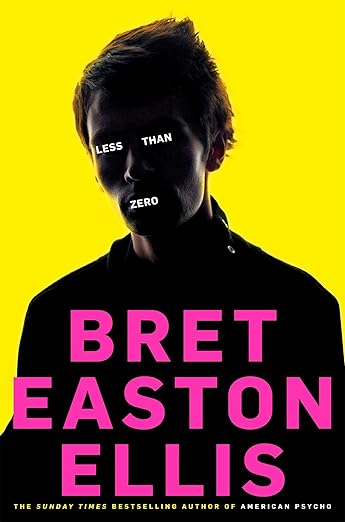
👀 First impressions: Published in 1985, Less Than Zero was Bret Easton Ellis’s debut novel, written while he was still a college student. It follows Clay, a young man returning home to Los Angeles for winter break. Instead of comfort, he finds a world of shallow parties, drug-fuelled nights, and friends lost in excess. With its minimalist style and unflinching eye, the book quickly became a modern classic and one of the defining portrayals of 1980s disaffection.
✅ What I Liked: The spare, cool prose perfectly mirrors the detachment of its characters. Ellis doesn’t tell the reader what to think; he simply places us in the middle of the emptiness and lets the bleakness seep in. The shocking moments, quietly delivered, almost without emphasis. become more disturbing because of that flat tone. It’s unsettling in the best possible way.
❎ What I didn’t Like: Because the narration is so emotionally numb, it can be hard to connect. Clay often feels like he’s watching life rather than living it, and the lack of narrative drive might frustrate readers who prefer a clear plot or stronger character development. The novel is more mood and atmosphere than story.
📚 Why You Should Read This Book: If you’re drawn to modern classics or want to understand the cultural anxieties of the 1980s, this is essential reading. It’s an important text for fans of transgressive fiction and for anyone interested in how Ellis went on to shape controversial, provocative literature in later works.
💭 Final Thoughts: Less Than Zero isn’t a warm or inviting novel—it’s cold, sharp, and lingering. It captures a generation consumed by money, drugs, and detachment, leaving behind an impression that’s more haunting than enjoyable.



 Minnie's Fiction Addiction