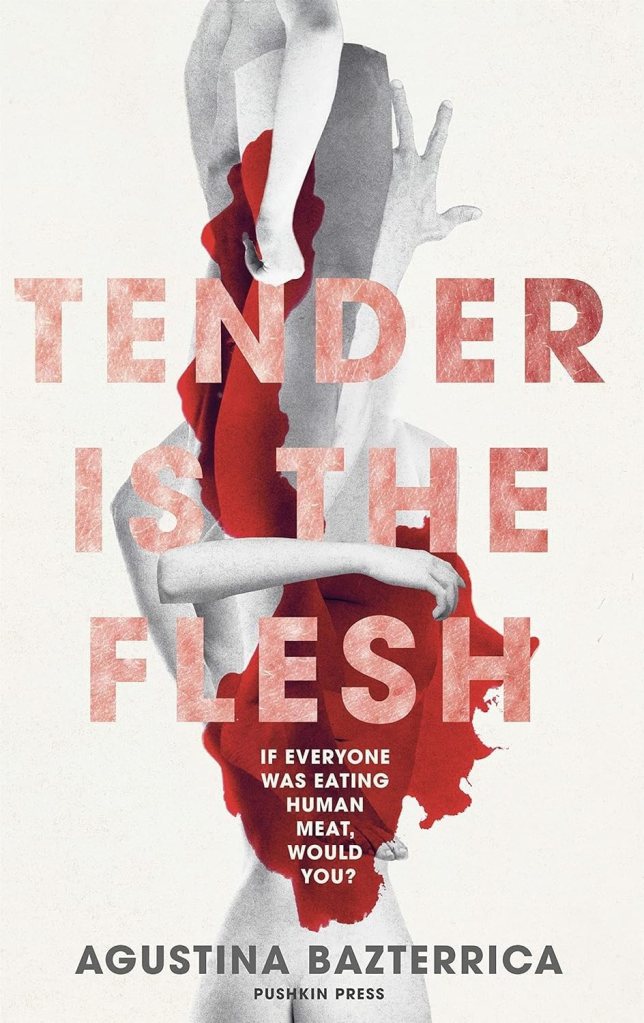
👀 First impressions: Tender is the Flesh is one of those books that lingers long after you’ve turned the final page. Set in a chilling dystopian world where a virus has supposedly made animal meat poisonous, humanity turns to the unthinkable alternative: farming, slaughtering, and consuming humans, rebranded as “special meat.” From the very first chapter, Agustina Bazterrica’s detached and clinical style makes this horror feel disturbingly plausible, drawing the reader into a society where morality has been stripped away and replaced by bureaucratic systems that normalize the unthinkable.
✅ What I Liked: What struck me most was the cold precision of the prose, which perfectly mirrors the sterile, dehumanized world it depicts. The protagonist, Marcos, is both complicit in and repulsed by the industry that sustains this society, and his grief and internal conflict make him a deeply compelling figure. The world-building is subtle yet terrifyingly complete, from the language used by officials to the matter-of-fact descriptions of farming practices. Every detail works together to make the horror feel real, and the devastating ending is one of those moments that leaves you stunned, desperate to discuss what you’ve just read.
❎ What I didn’t Like: The novel is unflinching in its depiction of violence and brutality, which, while necessary to the story, can be overwhelming. It’s not a book for the faint-hearted. The detached narrative style, although fitting, sometimes creates a sense of distance that makes it difficult to emotionally connect with Marcos. Secondary characters are not deeply developed, which occasionally makes the book feel more like a philosophical experiment than a fully fleshed-out story.
📚 Why You Should Read This Book: If you are looking for a novel that pushes boundaries and forces you to confront uncomfortable truths about consumption, capitalism, and complicity, then Tender is the Flesh is essential reading. It is not horror for horror’s sake; it is a thought-provoking allegory that asks how much cruelty we are willing to ignore when it serves our own interests. This is the kind of book that demands discussion, one you’ll want to dissect and revisit with others who have been equally shaken by it.
💭 Final Thoughts: Tender is the Flesh is disturbing, relentless, and unforgettable. It is less about shock value and more about the systems of cruelty that society chooses to normalize, making it an uncomfortable mirror to our own world. While it is not an easy read, it is an important one, a novel that will stay with you long after you finish, lingering in the back of your mind like a shadow you cannot quite shake.
👀 First impressions: When I picked up My Year of Rest and Relaxation, I expected something bleak, but what I got was both unsettling and oddly captivating. Published in 2018, Ottessa Moshfegh’s novel follows an unnamed narrator in early 2000s New York who decides to sleep for a year, aided by a cocktail of dubious prescriptions and the world’s most questionable psychiatrist. It’s a strange premise—part satire, part tragedy, and one that immediately intrigued me.
✅ What I Liked: Moshfegh’s writing is razor-sharp, blending dark humour with biting social commentary. The narrator’s detached, sardonic voice makes the book compulsively readable, even when she’s at her most unlikable. I especially appreciated how the novel skewers the shallow consumer culture of the time, with references to fashion, art, and pop culture that feel both of their era and timelessly ridiculous. The relationship with Reva, the narrator’s needy best friend, stood out as one of the strongest elements, tragic, hilarious, and painfully real.
❎ What I didn’t Like: The protagonist’s extreme detachment can make it difficult to emotionally invest. At times, I felt like I was watching events through frosted glass, fascinating, but at a distance. The pacing also drifts in places, which fits the theme of sleep and withdrawal, but occasionally slowed my reading momentum.
📚 Why You Should Read This Book: If you enjoy novels that are offbeat, clever, and a little uncomfortable, this one is worth picking up. It’s not a book that offers comfort, it’s more of a mirror, reflecting back the absurdities of life and the ways people try (and fail) to escape it.
💭 Final Thoughts: My Year of Rest and Relaxation is not for everyone, it’s strange, unsettling, and at times deeply unlikable, but that’s what makes it so powerful. I closed the final page both disturbed and impressed, still thinking about it days later.
Can we talk about something that’s been bugging me? The whole reading-as-a-sport thing that’s everywhere these days. You know what I mean, those posts where people are like “Just finished my 47th book this year!” or the panic that sets in when you realize it’s November and you’ve only read twelve books when your Goodreads goal was twenty-five.
Look, I get it. I’ve been there. But can we please just chill out about this stuff?
When Reading Became Homework
I used to be totally obsessed with my reading numbers. Like, embarrassingly obsessed. I had spreadsheets (yes, spreadsheets) tracking not just how many books I’d read, but pages per day, average reading speed, you name it. I’d get genuinely stressed if I wasn’t “on pace” for my yearly goal.
The whole thing was ridiculous. I remember one time actually putting down a book I was really enjoying because it was “too long” and I needed to hit my numbers for the month. Who does that? Apparently, me circa 2019.
It took me way too long to realize I’d turned reading, something I genuinely loved, into this weird productivity challenge. And for what? So I could post a slightly higher number on social media at the end of the year?
The Thing About “Slow” Readers
Here’s what really gets me: this idea that reading fewer books somehow makes you a worse reader. That’s like saying someone who takes their time at an art museum is worse at appreciating art than someone who speed-walks through it.
I have a friend who reads maybe eight books a year. But she really reads them, you know? She’ll text me random quotes, bring up something she read weeks later in conversation, recommend books to people based on stuff she read months ago because she actually absorbed it. Meanwhile, I used to blast through books so fast I couldn’t tell you the main character’s name a week later.
Who’s the better reader here? Come on.
The Weird Pressure We Put on Ourselves
Social media has made this so much worse. Everyone’s posting their monthly wrap-ups and yearly stats, and suddenly reading feels like some kind of performance. I’ve seen people stress about “wasting time” on graphic novels because they’re “too fast,” or feeling guilty about re-reading favorites because it “doesn’t count.”
This is insane! Since when does enjoying a graphic novel not count as reading? Since when is revisiting a book you love a waste of time? I’ve probably read “The Princess Bride” fifteen times, and I regret exactly zero of those re-reads.
We’ve created all these invisible rules about what counts, what’s impressive, what makes you a “real reader.” It’s exhausting.
What Actually Matters
You know what makes someone a good reader? Caring about what they’re reading. Being open to new ideas. Getting excited about books. Thinking about what they’ve read. Sharing books they love with other people.
None of that has anything to do with speed or quantity.
Some of my best reading experiences have been with books that took me forever to finish. I spent like three months reading “Circe” because I kept going back and re-reading beautiful passages. Was that a waste of time? Absolutely not. It was perfect.
On the flip side, some of my favorite reading memories are from weekends when I devoured an entire series in two days, ordering pizza and ignoring my phone and just living in someone else’s world for forty-eight hours straight.
Both of these are valid ways to read. Both brought me joy. Neither is better than the other.
My Reading Reality Check
These days, I still keep track of what I read, but more like a diary than a competition. I want to remember the books that hit me at the right moment, or the ones that made me think differently about something. But I stopped setting those aggressive yearly goals that just made me anxious.
Some months I read a ton. Other months I start five different books and finish none of them because I’m just not in the right headspace. Some years I get really into poetry or graphic novels or biographies, and my “book count” looks totally different than the year I was obsessed with fantasy series.
And you know what? That’s totally fine. My reading life doesn’t need to be consistent or impressive or optimized. It just needs to work for me.
Finding Your Own Rhythm
Maybe you’re someone who genuinely loves setting reading goals and crushing them. That’s awesome! If tracking your numbers motivates you and makes reading more fun, keep doing it.
Maybe you’re more of a “one perfect book every few months” person. Also awesome!
Maybe you go through phases where you read constantly and then don’t touch a book for weeks. Still awesome!
Maybe you only read romance novels, or only non-fiction, or only manga, or only books your friends recommend, or only books you find at yard sales. All awesome!
The only thing that matters is that you’re reading things you actually want to read, in whatever way feels good to you.
Remember Why We’re Here
At the end of the day, we read because books are amazing. They let us experience different lives, understand new perspectives, escape our own heads for a while, learn cool stuff, feel less alone in the world.
That magic doesn’t care how fast you read. It doesn’t care if you finish every book you start. It doesn’t care if you prefer literary fiction or beach reads or cookbooks or comics.
The best reading advice I can give you? Ignore everyone else’s numbers, including mine. Read what you want, when you want, however fast or slow feels right. Your reading life is yours, not a performance for anyone else.
Trust me, the books will still be there whether you read them in January or December, whether it takes you two days or two months to finish them. And the really good ones? They’ll wait patiently for you to be ready for them.
What’s your relationship with reading like? Are you a goal-setter, a mood reader, or somewhere in between? I’d love to hear about the books that have stuck with you, regardless of how they fit into any yearly tallies.
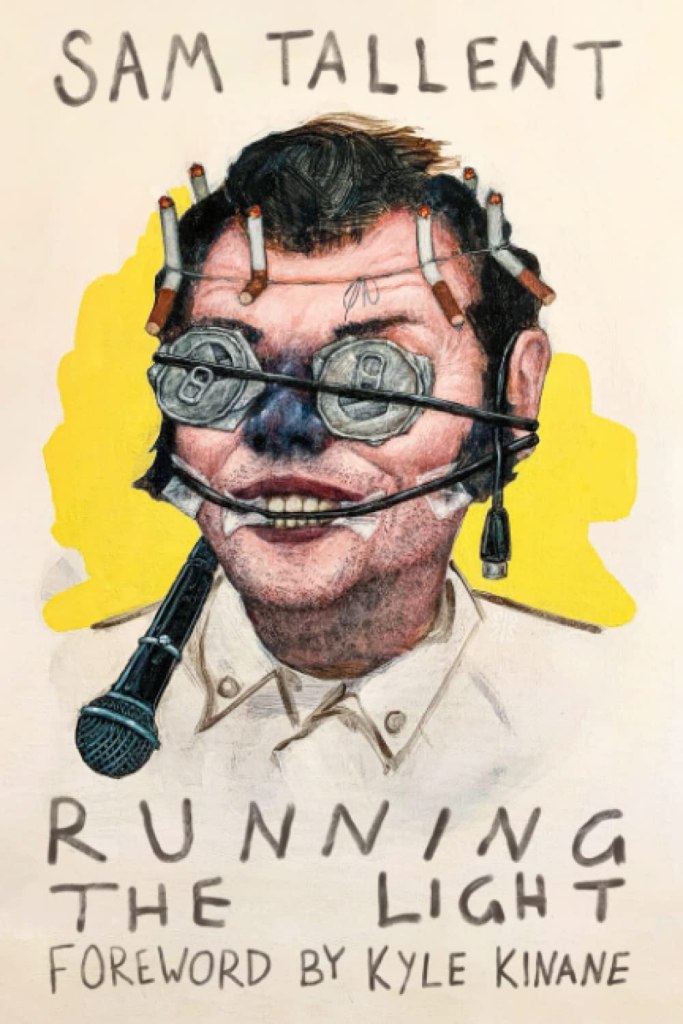
👀 First impressions: Running the Light is often described as one of the greatest novels ever written about stand-up comedy, and it’s easy to see why. Published in 2020 by comedian Sam Tallent, the book has gained a cult following within the comedy world, praised by everyone from Marc Maron to Doug Stanhope. It follows Billy Ray Schafer, a washed-up road comic whose glory days are far behind him. Once celebrated as a rising star, Billy Ray now limps through grimy clubs, dingy motels, and strip-mall bars, chasing laughs, booze, and fleeting validation. From the start, the book promises an unflinching, brutally honest look at the comedy circuit, and the messy human behind the mic.
✅ What I Liked: Tallent’s writing is raw, visceral, and surprisingly poetic. He captures both the bleakness of life on the road and the strange magic of comedy itself. Billy Ray is a deeply flawed character, drunk, self-destructive, irresponsible, but he’s written with such depth that you can’t look away. The dialogue crackles with authenticity; it feels like you’re sitting in a backroom with comics trading stories and insults. The descriptions of small-town venues, burned-out crowds, and the grind of performing night after night hit with a realism that only someone who’s lived it could deliver.
Another highlight is the book’s emotional undercurrent. Amid the chaos and dark humor, there’s a sense of profound loneliness and regret that makes Billy Ray’s journey compelling rather than cartoonish. You get the sense that Tallent isn’t just skewering stand-up culture, he’s mourning it.
❎ What I didn’t Like: The book doesn’t pull its punches, and that can be tough to stomach. Billy Ray is often unlikeable, and his spiral into drugs, alcohol, and bad decisions can feel repetitive. Some readers might find the relentless bleakness exhausting, there’s not much redemption or hope here. If you prefer your fiction tidy or uplifting, Running the Light probably isn’t for you.
📚 Why You Should Read This Book: If you’re fascinated by stand-up comedy, the lives of road comics, or stories about deeply human, broken characters, this book is essential reading. It’s darkly funny, painfully honest, and offers a side of comedy most audiences never see. Even if you’ve never stepped into a comedy club, Tallent’s sharp prose and character study make it a gripping piece of literary fiction in its own right.
💭 Final Thoughts: Running the Light is a brutal, unflinching portrait of a man chasing relevance long after the world has moved on. It’s not an easy read, but it’s a rewarding one, equal parts heartbreaking, funny, and painfully real. Sam Tallent proves that sometimes the best stories about comedy are tragedies in disguise.
Some books are so gripping, so immersive, that you forget they’re not works of fiction. The best narrative non-fiction has that magical quality, blending research, history, and lived experience into stories that sweep you along like a novel. This week’s theme is non-fiction that reads like fiction: books with the drama, pacing, and emotional pull of storytelling, all while being absolutely true.
📚 The Radium Girls by Kate Moore
This is history at its most haunting. Moore tells the story of the young women who painted watch dials with glowing radium paint in the early 20th century, unknowingly poisoning themselves. It reads like a tragic thriller, following their fight for justice against corporate greed. Heartbreaking yet inspiring, it feels like a novel but carries the weight of truth.
📚 Empire of Pain by Patrick Radden Keefe
A sweeping family saga worthy of a Dickens novel, except this one’s true. Keefe follows the rise of the Sackler family and their role in America’s opioid crisis. Packed with betrayals, backroom deals, and devastating consequences, this is investigative journalism that unfolds like an epic tale of power and downfall.
📚 Into Thin Air by Jon Krakauer
If you love survival thrillers, Krakauer’s firsthand account of the 1996 Everest disaster is unmissable. The pacing is relentless, the danger palpable, and the mountain itself looms like a character. You’ll find yourself holding your breath, even though you know the tragic outcome.
📚 The Immortal Life of Henrietta Lacks by Rebecca Skloot
Skloot weaves science, history, and biography into a compelling narrative about Henrietta Lacks, the woman whose cells changed modern medicine. It reads with the intimacy of a family saga and the urgency of a medical drama.
📚 Say Nothing by Patrick Radden Keefe
Another masterpiece by Keefe, this time diving into the Troubles in Northern Ireland. It’s structured like a murder mystery but unfolds as a chilling, true account of violence, secrecy, and divided loyalties.
📚 Midnight in the Garden of Good and Evil by John Berendt
Set in Savannah, Georgia, this true-crime story is drenched in atmosphere. Berendt captures eccentric characters, Southern Gothic charm, and a mysterious murder trial that reads like a Faulkner novel come to life.
📚 In Cold Blood by Truman Capote
The grandfather of narrative non-fiction, Capote’s account of a brutal Kansas murder is written with the precision of journalism and the psychological depth of a novel. Chilling, immersive, and groundbreaking, it set the standard for this entire genre.
✨ Why this theme works: If you’re someone who wants to dip into non-fiction but finds it intimidating or dry, narrative-driven books like these are the perfect bridge. They offer the drama and suspense of fiction while leaving you with the satisfaction of knowing you’ve learned something true, lasting, and impactful.
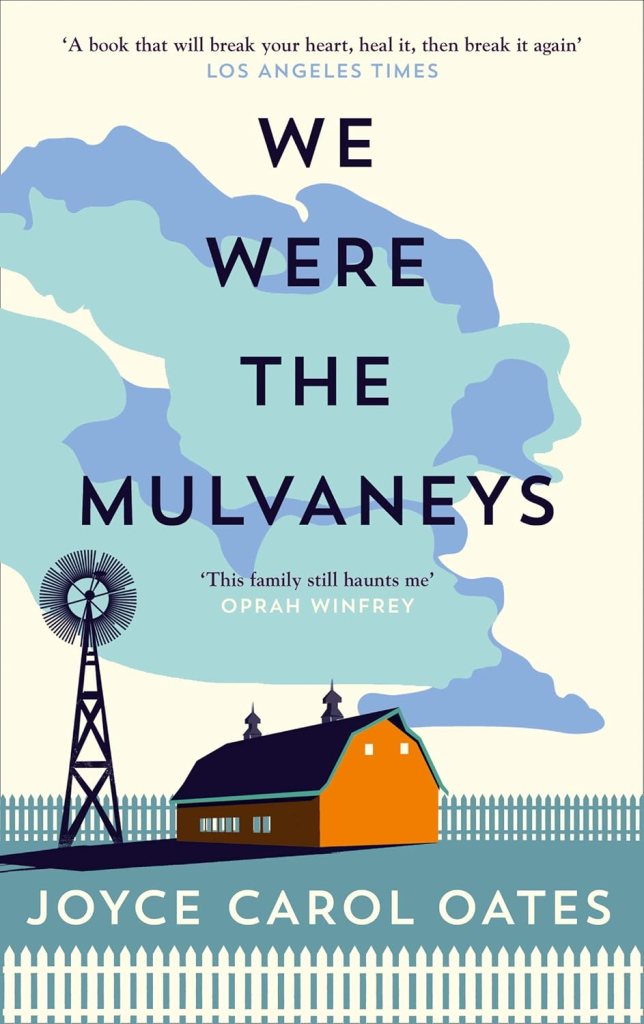
👀 First impressions: We Are the Mulvaneys by Joyce Carol Oates, published in 1996, is a novel that traces the rise and fall of a seemingly perfect American family. The Mulvaneys live an enviable life on their idyllic farm until a traumatic event shatters their stability, sending each member of the family down a path of estrangement and struggle. The novel was widely praised at the time of release, even becoming an Oprah’s Book Club pick, which set my expectations high.
✅ What I Liked: Oates has an undeniable gift for prose, and there are passages in this novel that are both lyrical and haunting. She captures the nuances of family dynamics, particularly the ways in which silence and avoidance can do more harm than words. The book’s ambition, charting the disintegration of a family across decades, is impressive in scope, and when it works, it hits hard.
❎ What I didn’t Like: Unfortunately, the execution often dragged. The novel is sprawling, and its meandering pace made it difficult to stay fully engaged. Many sections felt overwritten, with tangents that diluted the emotional impact. While the central event of the novel is devastating, its handling felt frustratingly indirect, leaving me distanced from the characters rather than invested in their struggles. By the end, I felt more exhausted than moved.
📚 Why You Should Read This Book: If you’re a devoted Joyce Carol Oates reader who appreciates her sprawling, gothic-tinged style, you may find more to admire here than I did. Readers who enjoy slow-burn family sagas with dense prose may also find value in it.
💭 Final Thoughts: We Are the Mulvaneys has moments of beauty and insight, but for me, those were buried beneath an overlong and uneven narrative. It’s a novel that promises emotional devastation and catharsis, but instead I felt detached from the characters’ journeys.
👀 First impressions: Mythos by Stephen Fry, published in 2017, is Fry’s ambitious retelling of the ancient Greek myths. From the birth of the cosmos to the rise of the Olympian gods, Fry guides readers through the strange, violent, and beautiful stories that have shaped Western literature and culture. As a longtime Stephen Fry fan, I was immediately drawn to this book, his sharp wit, warmth, and intelligence are qualities I’ve always admired in his work, and they shine brilliantly here. Greek mythology has been reimagined countless times, but Fry offers a version that feels both accessible and richly entertaining.
✅ What I Liked: Fry’s storytelling voice is delightful, wry, playful, and brimming with affection for the source material. He doesn’t just recount the myths; he revels in their absurdities and contradictions, making the gods feel less like remote deities and more like larger-than-life characters in a sprawling soap opera. His inclusion of etymology and asides about how these myths seep into modern language and thought is both clever and educational, adding depth without ever feeling heavy-handed.
❎ What I didn’t Like: The sheer scope of the book means that, at times, the narrative can feel dense, with a flurry of names and family trees that might overwhelm readers less familiar with mythology. Some sections, while meticulously detailed, slow the pace a little, and I occasionally wished for more narrative focus rather than encyclopedic coverage.
📚 Why You Should Read This Book: If you’re fascinated by mythology but find traditional retellings intimidating or overly academic, Mythos is an ideal entry point. Fry makes these stories feel fresh, relevant, and fun, without stripping away their strangeness or grandeur. It’s a great pick for fans of Neil Gaiman’s Norse Mythology or Madeline Miller’s novels who want to explore Greek myths with a mix of scholarship and humour.
💭 Final Thoughts: Mythos is a vibrant retelling that captures the chaos, drama, and wonder of Greek mythology in a voice that is unmistakably Stephen Fry’s. It’s not a quick read, but it’s one to savour, part entertainment, part education, and wholly engaging.
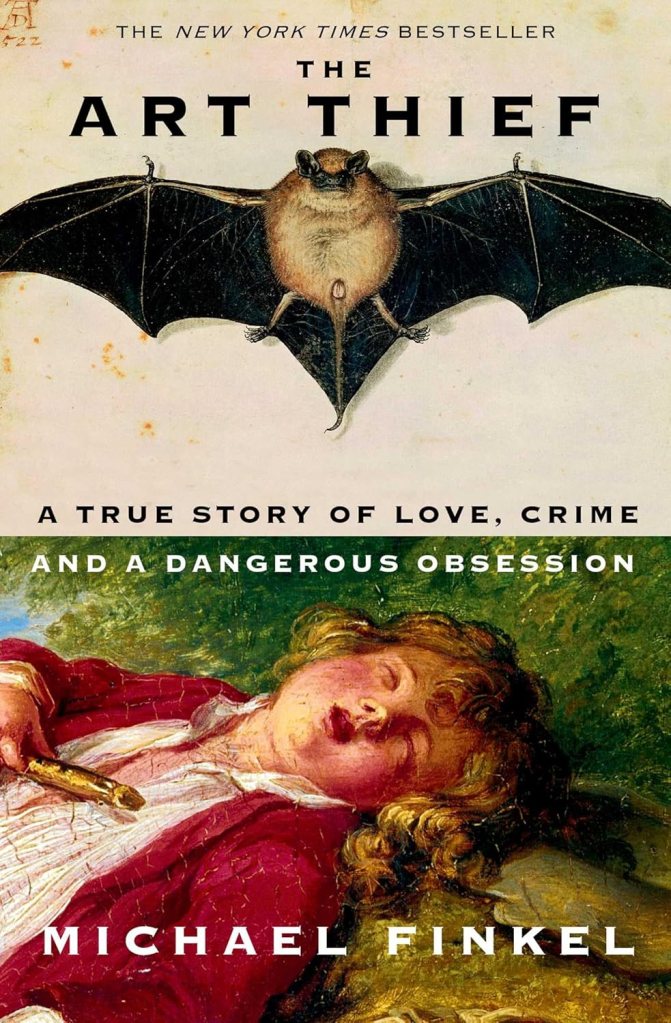
👀 First impressions: The Art Thief by Michael Finkel is a gripping piece of narrative non-fiction that feels stranger, and more thrilling, than any crime novel. Published in 2023, the book follows Stéphane Breitwieser, a French man who, between 1995 and 2001, stole more than 200 works of art from museums and galleries across Europe. Unlike most thieves, Breitwieser didn’t sell a single piece; instead, he kept them in his bedroom, building his own secret collection. Finkel, an acclaimed journalist known for The Stranger in the Woods, brings his sharp eye for character and detail to a story that exposes both the audacity of the crimes and the psychology of the man behind them.
✅ What I Liked: The book reads like a heist thriller, yet it’s all meticulously researched fact. Finkel’s prose is elegant and clear, giving the narrative the pace of a novel without losing its grounding in journalism. Breitwieser is an utterly fascinating figure, brilliant, arrogant, and reckless, and Finkel doesn’t shy away from showing both his cunning and his flaws. The descriptions of the stolen artworks are vivid, reminding the reader of their immense cultural value and the staggering risk Breitwieser took each time.
❎ What I didn’t Like: At times, the book leans heavily into Breitwieser’s psychology, but doesn’t always answer the deeper questions: what drives someone to risk everything for possession rather than profit? While Finkel paints a compelling portrait, some areas, especially the aftermath and the broader implications for the art world, felt like they could have been expanded.
📚 Why You Should Read This Book: If you’re a fan of true crime, art history, or stories that delve into the minds of unconventional criminals, The Art Thief is an irresistible read. It’s perfect for readers who enjoy stylish, well-paced nonfiction in the vein of Erik Larson or Patrick Radden Keefe.
💭 Final Thoughts: The Art Thief is a fascinating look at one of the most prolific art thieves in history, told with the skill of a seasoned storyteller. While it doesn’t always probe as deeply as it could, the book succeeds in pulling readers into a world of beauty, obsession, and brazen theft.
True crime has exploded from a niche interest into a cultural phenomenon. Walk into any bookstore, and you’ll find entire sections dedicated to real-life tales of murder, mystery, and mayhem. But what exactly draws millions of readers to these dark narratives, and which books should be on every true crime enthusiast’s radar?
The Psychology Behind Our Fascination
The appeal of true crime runs deeper than simple morbid curiosity. Psychologists suggest several factors drive our attraction to these stories. There’s the safety factor, we can experience danger and chaos from the comfort of our reading chair. True crime also satisfies our problem-solving instincts, allowing us to play detective alongside investigators. Perhaps most importantly, these books help us understand the incomprehensible, offering insight into minds and motivations that seem utterly foreign to most of us.
Essential True Crime Classics
In Cold Blood by Truman Capote
Often considered the gold standard of true crime writing, Capote’s 1966 masterpiece revolutionized the genre by applying literary techniques to factual reporting. His account of the brutal murder of the Clutter family in Kansas reads like a novel while maintaining journalistic integrity. Capote spent six years researching and writing the book, conducting extensive interviews with the killers themselves.
Helter Skelter by Vincent Bugliosi
Prosecutor Vincent Bugliosi’s inside account of the Charles Manson murders remains one of the most gripping true crime narratives ever written. Bugliosi doesn’t just recount the crimes, he takes readers inside the courtroom and into the twisted psychology of one of America’s most notorious killers.
The Stranger Beside Me by Ann Rule
This book carries unique weight because Rule actually knew Ted Bundy personally, working alongside him at a crisis hotline while he was committing his crimes. Her perspective as both a crime writer and someone who considered Bundy a friend creates an unsettling intimacy that makes this account particularly chilling.
Modern True Crime Standouts
I’ll Be Gone in the Dark by Michelle McNamara
McNamara’s posthumously published investigation into the Golden State Killer showcases the new generation of citizen detectives. Her obsessive research and compelling writing style helped bring renewed attention to cold cases and demonstrated how dedicated amateurs could contribute to solving crimes.
The Devil in the White City by Erik Larson
Larson masterfully weaves together the stories of the 1893 Chicago World’s Fair and serial killer H.H. Holmes. This book exemplifies how modern true crime writers can expand beyond simple crime narratives to explore broader historical and social contexts.
Mindhunter by John Douglas
Former FBI profiler Douglas takes readers inside the development of criminal profiling techniques. His firsthand accounts of interviewing notorious killers provide insights into investigative methods while revealing the psychological toll such work takes on those who pursue it.
Different Flavors of True Crime
The genre has expanded far beyond traditional murder cases. Today’s readers can explore:
Historical True Crime: Books like “The Lost City of Z” by David Grann blend adventure, mystery, and historical investigation.
Corporate Crime: Works such as “Bad Blood” by John Carreyrou expose fraud and corruption in the business world.
Cold Cases: Authors like James Renner specialize in unsolved mysteries, often incorporating new evidence and theories.
Investigative Journalism: Books that expose systemic failures, like “Catch and Kill” by Ronan Farrow.
What Makes Great True Crime Writing
The best true crime books share several characteristics. They respect victims and their families, avoiding exploitation while still telling compelling stories. They’re meticulously researched, often involving years of investigation and interviews. Great true crime writers also understand pacing—they know when to reveal information and when to hold back to maintain suspense.
Additionally, the most memorable books in this genre go beyond just recounting events. They explore larger themes about society, justice, human nature, and the systems meant to protect us. They ask not just “what happened?” but “why did this happen, and what does it tell us about ourselves?”
The Digital Age Impact
Modern technology has transformed both true crime writing and reading. Authors now have access to digitized records, online databases, and social media trails that previous generations of crime writers could never imagine. Meanwhile, podcasts like “Serial” and “My Favorite Murder” have created new audiences hungry for true crime content in all formats.
This digital revolution has also democratized crime investigation, with amateur sleuths using online tools to contribute to cold case investigations. However, this has raised ethical questions about the responsibility that comes with such access to information and the potential for harassment of suspects or victims’ families.
Building Your True Crime Library
For newcomers to the genre, start with the classics mentioned above before branching out based on your interests. If you’re drawn to serial killers, explore works by FBI profilers and investigative journalists. If historical mysteries appeal to you, seek out authors who specialize in cold cases or historical crimes.
Don’t overlook international true crime, authors like Roberto Saviano (“Gomorrah”) and David Peace (Red Riding Quartet) offer perspectives on crime from different cultures and legal systems.
The Ethical Dimension
As true crime continues to grow in popularity, questions about ethics become increasingly important. The best authors in this field walk a careful line between satisfying reader curiosity and respecting the real people affected by these crimes. They avoid sensationalizing violence while still creating compelling narratives.
Readers, too, have a responsibility to engage thoughtfully with this material, remembering that behind every true crime story are real victims, families, and communities forever changed by these events.
Looking Forward
True crime shows no signs of slowing down. New books continue to break ground, whether through innovative storytelling techniques, previously unexplored cases, or fresh perspectives on familiar crimes. The genre’s evolution reflects our ongoing fascination with the darker aspects of human nature and our perpetual quest to understand what drives people to commit unthinkable acts.
Whether you’re a longtime fan or just discovering true crime, there’s never been a better time to explore this rich and complex genre. Just remember to read responsibly, with respect for the real lives behind these stories and an understanding that the best true crime writing illuminates not just individual crimes, but the broader human condition itself.
What true crime books have left the biggest impression on you? Share your recommendations in the comments below.
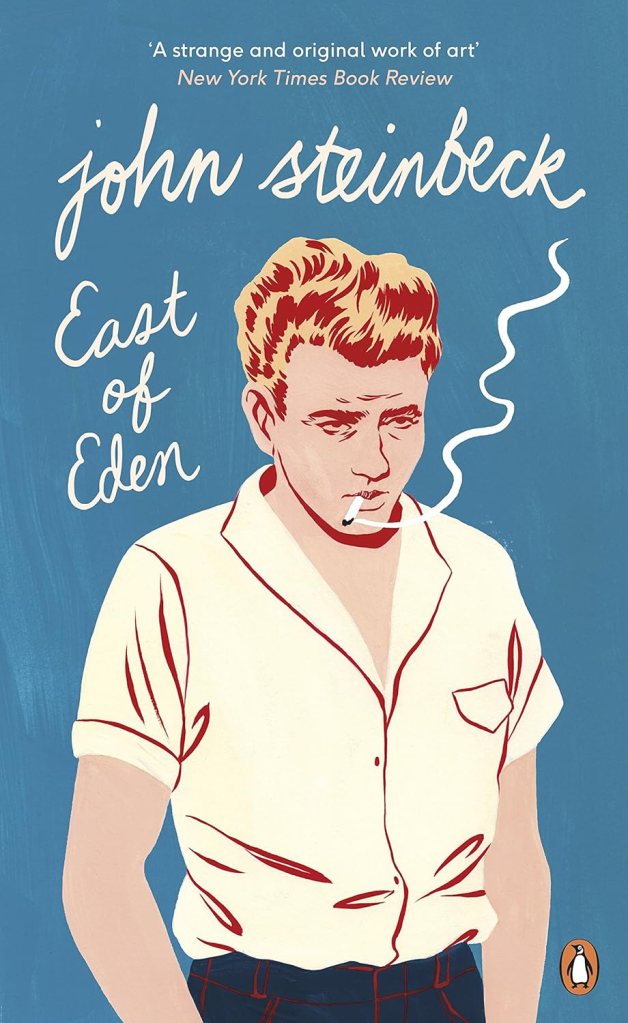
👀 First impressions: East of Eden is widely considered John Steinbeck’s magnum opus, a sweeping family saga that spans generations in California’s Salinas Valley. Written late in his career, Steinbeck famously described this book as the culmination of everything he had ever written, a work into which he poured his heart, history, and philosophy. It’s a novel that wrestles with the biggest themes of human existence: love, betrayal, morality, and the eternal struggle between good and evil.
The story follows two families, the Trasks and the Hamiltons, whose lives intertwine in a narrative echoing the biblical story of Cain and Abel. Steinbeck uses this allegory to explore the human condition, asking whether our lives are predetermined by fate or shaped by choice. The concept of timshel (“thou mayest”) lies at the center of the novel, offering the idea that, despite hardship, humans have the power to choose their path.
Upon its release, the book received mixed reviews; some critics thought it was sprawling and too ambitious, while others immediately recognized its brilliance. Over time, however, East of Eden has cemented itself as a cornerstone of American literature and is often regarded as Steinbeck’s most personal and definitive work.
✅ What I Liked: I was struck by how vast and intimate the novel felt at the same time. Steinbeck paints landscapes with the same care he gives his characters, the Salinas Valley becomes almost a living presence in the story. His characters, from the deeply flawed Adam Trask to the enigmatic and chilling Cathy Ames, are unforgettable, layered, and human in all their imperfections.
The moral depth is extraordinary. The recurring theme of choice and moral responsibility resonates far beyond the pages. The novel is never simply about good versus evil, it’s about the murky, complex middle ground in which most of us live.
he prose, too, is exquisite. Steinbeck manages to be lyrical without losing clarity, philosophical without becoming didactic. It’s a book that invites slow, thoughtful reading, rewarding patience with insight.
❎ What I didn’t Like: The novel meanders through philosophical digressions, and certain passages can be dense. But for me, these moments felt more like opportunities to pause and reflect rather than flaws. Readers who prefer tightly plotted stories might find these sections challenging.
📚 Why You Should Read This Book: If you’re interested in exploring American literature at its richest, East of Eden is essential. It’s a book that shaped the mid-20th century literary landscape, influencing countless writers who came after Steinbeck. It bridges the personal and the universal, the historical and the timeless.
Steinbeck’s exploration of timshel, the human ability to choose good over evil, remains profoundly relevant today. Few novels can claim to both tell a riveting story and pose questions that haunt the reader long after the last page, but East of Eden does both.
💭 Final Thoughts: John Steinbeck’s impact on literature cannot be overstated. Winner of the Nobel Prize in 1962, he gave voice to ordinary people and captured the spirit of America in transition. With novels like Of Mice and Men, The Grapes of Wrath, and Cannery Row, he chronicled human resilience and social struggle. But in East of Eden, Steinbeck went further, he sought to capture not just an era or a class of people, but the essence of humanity itself.
This book continues to resonate with readers because its themes are eternal. It reminds us of our capacity for cruelty, our longing for love, and our potential for redemption. In many ways, it feels less like a novel of its time and more like a novel for all time.




 Minnie's Fiction Addiction