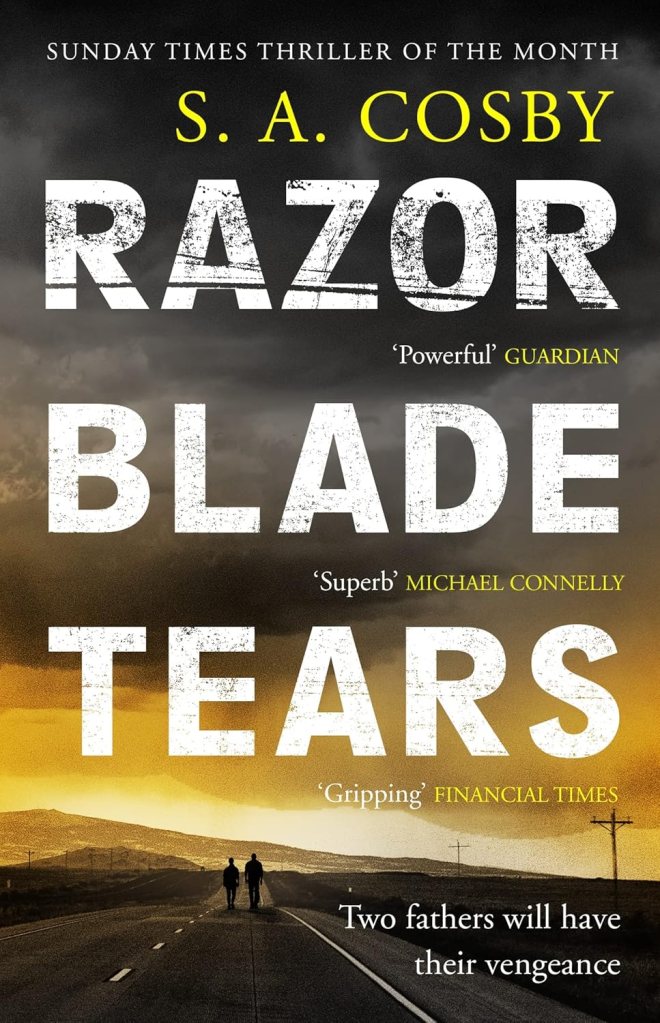
👀 First impressions: From the moment I picked up Razorblade Tears, I knew it would be gritty and raw, but I wasn’t prepared for just how much it would grab me by the throat and not let go. S.A. Cosby tells the story of Ike Randolph and Buddy Lee, two ex-cons and estranged fathers who join forces after their sons are murdered. Their journey is not just one of vengeance but also of redemption, grief, and reckoning with their own prejudices. This book is part crime thriller, part family drama, and entirely unforgettable.
✅ What I Liked: The writing is razor-sharp (pun intended), unflinching in its violence yet poetic in its emotional depth. I loved how Cosby painted Ike and Buddy Lee as deeply flawed men, violent, bitter, homophobic, yet forced them to confront their failures as fathers. The relationship that grows between the two men is both heartbreaking and heartwarming. The pacing is relentless, and every chapter pushed me further into a world of vengeance and pain, but also love and healing.
❎ What I didn’t Like: Honestly, very little. The violence is graphic, and for some readers it might be overwhelming, but it never felt gratuitous to me. Instead, it mirrored the harsh reality of the characters’ lives and choices.
📚 Why You Should Read This Book: If you love thrillers that dig deeper than just action and suspense, this is the book for you. It’s a powerful meditation on love, loss, and the legacy of hate. Cosby manages to balance breakneck storytelling with themes that stay with you long after the final page.
💭 Final Thoughts: Razorblade Tears is a book that lingers. It’s not just a revenge story; it’s about forgiveness, redemption, and the weight of what it means to be a father. I found myself thinking about Ike and Buddy Lee long after I finished, and that, to me, is the mark of an extraordinary novel.
Every August, book lovers around the world celebrate Women in Translation Month (WITMonth), but honestly, these brilliant voices deserve to be read all year round. Translation gives us access to stories that cross borders, languages, and perspectives, opening the door to incredible works we might never encounter otherwise.
This week, I’ve pulled together some powerful, thought-provoking, and unforgettable books by women in translation to add to your TBR. 🌍📚
📖 The Elegance of the Hedgehog by Muriel Barbery (translated from French by Alison Anderson)
Set in a Paris apartment building, this novel brings together Renée, a secretly intellectual concierge, and Paloma, a gifted twelve-year-old disillusioned with life. Witty, philosophical, and heart-wrenching, it’s a beautiful exploration of beauty, class, and human connection.
📖 Convenience Store Woman by Sayaka Murata (translated from Japanese by Ginny Tapley Takemori)
Keiko Furukura is 36, unmarried, and perfectly content working at a convenience store—until societal pressures creep in. Quirky, sharp, and unsettling, this slim novel is a razor-sharp critique of conformity and the meaning of “normal.”
📖 The Discomfort of Evening by Marieke Lucas Rijneveld (translated from Dutch by Michele Hutchison)
This International Booker Prize winner tells the story of Jas, a young girl grappling with grief after her brother’s sudden death. Haunting, raw, and unforgettable, it explores childhood, trauma, and loss with unflinching honesty.
📖 Our Share of Night by Mariana Enríquez (translated from Spanish by Megan McDowell)
A sprawling, gothic Argentine masterpiece that blends horror with family saga, the supernatural with the political. Enríquez crafts a darkly beautiful narrative about inheritance, power, and survival that lingers long after the final page.
📖 Voices from Chernobyl by Svetlana Alexievich (translated from Russian by Keith Gessen)
Nobel Prize winner Alexievich gathers oral histories from survivors of the Chernobyl disaster. Poetic, devastating, and deeply human, this is essential reading for understanding the personal toll of one of history’s greatest tragedies.
Why Read Women in Translation?
Because every story is shaped by culture, language, and lived experience. Reading women in translation doesn’t just broaden your bookshelf—it expands your worldview. These writers bring fresh perspectives, challenging assumptions and introducing readers to new rhythms of storytelling.
So this Wednesday, why not take a leap beyond borders and dive into a book by a woman in translation? You never know what stories might stay with you.
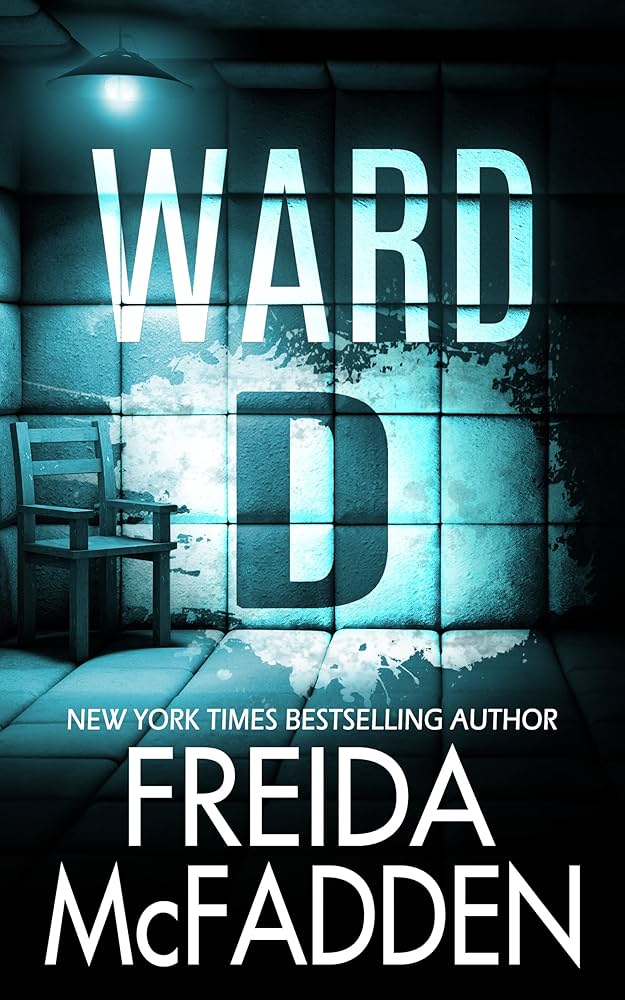
👀 First impressions: Ward D promises a dark and claustrophobic thriller, set in a psychiatric ward over the course of one night. The premise immediately caught my attention, an unsettling locked-in setting, a sense of mystery, and the possibility of exploring the hidden corners of the human mind. Unfortunately, while the pacing was quick and the tension occasionally effective, my initial excitement was quickly dampened by how the book chose to handle its subject matter.
✅ What I Liked: McFadden knows how to keep a story moving. The short chapters and constant twists made this a fast read, and there were a few genuinely creepy moments that delivered on atmosphere. If you’re only looking for a quick, popcorn-style thriller, there’s some entertainment value in the ride.
❎ What I didn’t Like: The representation of mental illness was the biggest disappointment. Rather than nuanced, human portrayals, the patients are presented in broad, exaggerated strokes—frightening, unstable, and dangerous. The ward itself feels less like a medical setting and more like a horror-movie backdrop, leaning on outdated stereotypes of psychiatric care. This left the story feeling shallow and, at times, offensive. It wasn’t just unrealistic, it risked reinforcing stigma around mental health.
📚 Why You Should Read This Book: If you enjoy fast-paced thrillers that don’t require much suspension of disbelief and you’re not too concerned with accuracy or sensitive representation, Ward D might still deliver the kind of escapist drama you’re after.
💭 Final Thoughts: While I appreciate McFadden’s ability to build suspense, Ward D ultimately fell flat for me because of its treatment of mental illness. Instead of adding depth, the psychiatric setting became a stereotype-laden stage that undermined the story’s potential. This could have been a chilling, thought-provoking thriller, but instead it left me feeling uncomfortable for all the wrong reasons.
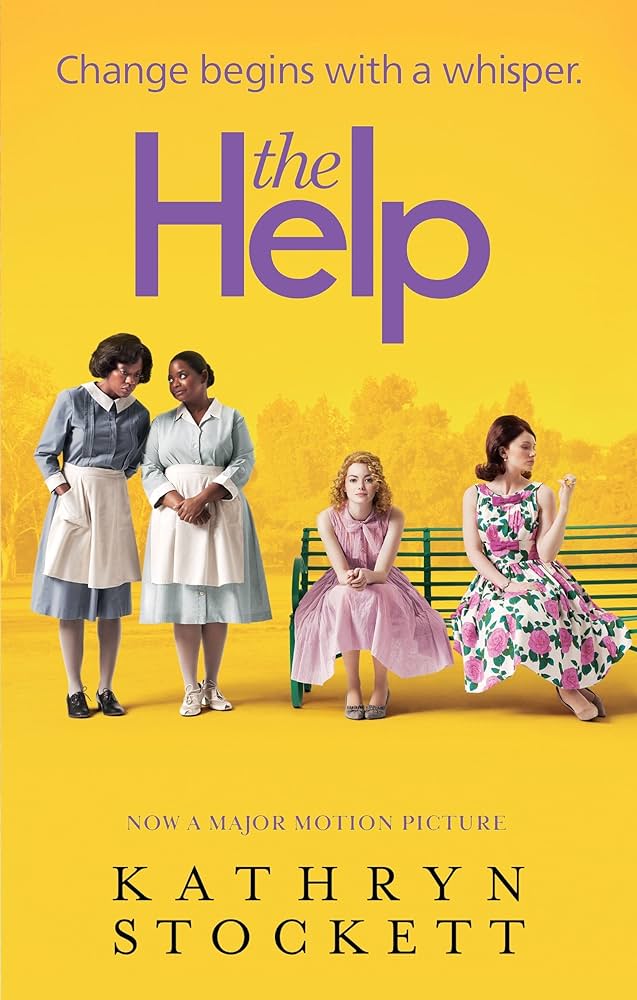
👀 First impressions: The Help by Kathryn Stockett is set in 1960s Jackson, Mississippi, a time and place where the Civil Rights Movement was reshaping America, but deep racial divides remained entrenched. The story follows three women: Aibileen, a wise and compassionate maid; Minny, a strong-willed but often outspoken maid; and Skeeter, a young white woman who dreams of becoming a writer. Together, they risk everything to tell the truth about what life is really like for Black maids working in white households. From the very first chapters, I was drawn into the tension, the courage, and the unspoken truths simmering beneath the surface.
✅ What I Liked: The strength of The Help lies in its characters. Aibileen’s warmth and quiet resilience, Minny’s sharp wit and honesty, and Skeeter’s gradual awakening to injustice make for a compelling trio of voices. The alternating perspectives brought depth and kept the narrative engaging. Stockett handles heavy themes—racism, inequality, friendship, and courage, with a blend of seriousness and humour, which makes the story both accessible and impactful. I particularly loved how the women’s bravery grew with each chapter, showing the power of unity against oppression.
❎ What I didn’t Like: While the book is undeniably moving, there were moments where it felt a little too polished or simplified, smoothing over the harsher realities of racism in that era. Some of the dialect choices also felt forced at times, which occasionally pulled me out of the story. It’s a powerful novel, but one that stops just short of digging as deeply as it could into the systemic violence and cruelty of the time.
📚 Why You Should Read This Book: If you enjoy historical fiction that blends heart with important social commentary, The Help is a must-read. It’s perfect for readers who appreciate stories of resilience, friendship, and quiet rebellion. Despite its flaws, it sparks reflection and conversation, two things any meaningful book should achieve.
💭 Final Thoughts: The Help is a moving and memorable novel that captures both the ugliness of prejudice and the strength of those who dare to challenge it. It’s equal parts heartwarming and heartbreaking, leaving readers with plenty to think about long after the final page.
Okay, real talk time. You’ve just finished writing what might be your best book review yet. You’re feeling pretty good about it, finger hovering over that “post” button, when suddenly… do I tag the author or not?
Why You Might Want to Tag Authors (The “Yes” Team)
It’s All About Building Those Bookish Connections
Look, when you tag an author in a glowing review, magic can happen. I’m talking about real conversations, genuine friendships, and that warm fuzzy feeling when an author you admire actually responds to your post. Especially with indie authors or debut novelists, your review might literally make their day (or week, or month).
You’re Actually Helping Their Career
Here’s the thing: when you tag an author in a positive review, you’re not just being nice—you’re being strategic. That author is probably going to share your review, which means their followers see your thoughtful analysis. More eyes on your blog = more readers discovering your amazing content. It’s a total win-win situation.
Sometimes You Just Want to Say Thanks
There’s something pretty special about being able to directly thank someone for creating something that made you laugh, cry, or stay up until 3 AM because you HAD to know what happened next. When you tag an author, you’re basically sliding into their DMs with a virtual hug.
Why You Might Want to Skip the Tag (The “Nope” Team)
Let’s Keep It Real About Honesty
Here’s the uncomfortable truth: when you know an author might see your review, it’s harder to be brutally honest. Even if you’re trying to be fair, there’s this little voice in your head going “but what if they see this?” And suddenly your three-star “it was fine but not amazing” review becomes a four-star “it was pretty good!” review. Not cool.
Nobody Wants to Hurt Someone’s Feelings
Authors are humans (shocking, I know). And humans have feelings. Even the most constructive criticism can sting when it lands directly in your notifications. Some authors handle feedback like champs, others… well, let’s just say Twitter has seen some things.
Professional Distance is a Real Thing
Some reviewers prefer to keep things professional. They see themselves as critics first, cheerleaders second. There’s nothing wrong with wanting to maintain that boundary between reviewer and author.
So What’s a Book Blogger to Do?
The Golden Rule: Stars Don’t Lie
A lot of us use the “4-5 star rule”: tag authors for your raves, skip the tag for anything 3 stars and below. It’s simple, it works, and it keeps everyone happy. Your 5-star review gets the author excited, your 2-star review doesn’t ruin anyone’s day.
Do Your Homework First
Before you tag anyone, take a quick peek at their social media. Are they the type who loves interacting with readers? Do they seem chill about mixed reviews? Some authors literally ask people to tag them in everything, while others prefer to discover reviews on their own time.
Timing Matters Too
A book that came out last week? Yeah, that author might appreciate the tag. A book from 1987? Probably not necessary (unless you’re reviewing a reissue, then maybe!).
If You’re Going to Tag, Here’s How to Do It Right
When You Do Tag:
Keep it real but respectful (even in positive reviews, you can mention tiny flaws)
Don’t go overboard with the gushing just because you’re tagging
Talk about the book, not the author’s personal life
Be yourself—fake enthusiasm is obvious and awkward
When You Don’t Tag:
Your review can still be honest without being mean
Maybe add a little note like “honest review” so people know you’re being transparent
Remember: authors can still find untagged reviews if they search
Focus on helping your readers decide if they’d like the book
Platform Drama is Real
Different platforms have different vibes, you know? Instagram tends to be more chill and friendly, Twitter can be… intense, and Goodreads is somewhere in between. An author might love Instagram comments but find Twitter mentions overwhelming. Pay attention to how authors interact on each platform.
Your Blog, Your Rules (Obviously)
At the end of the day, this is YOUR blog. If you want to tag authors in every positive review because you love building connections, go for it! If you prefer to keep things professional and untagged, that’s totally valid too.
The important thing is being consistent and maybe letting your readers know what your deal is. A quick “I tag authors in 4+ star reviews” in your bio or about page sets expectations and shows you’ve thought about it.
Let’s Wrap This Up
The book community is pretty amazing because we’re all here for the same reason: we’re obsessed with books. Whether you’re a tagger or a non-tagger, we’re all just trying to share our love of reading and help other people find their next favorite book.
Tagging authors can create beautiful connections and support writers, but it’s not the only way to be part of the community. Some of the most respected book bloggers never tag authors, and some of the most beloved ones tag everyone. There’s room for all of us.
The most important thing? Be authentic. Stay true to your readers. And remember that we’re all just book nerds trying to talk about the stories we love (or didn’t love so much). As long as you’re respectful and genuine, you’re doing it right.
Now stop overthinking it and go write that review! Your TBR isn’t going to read itself.
So what’s your take on tagging authors? Team tag or team no-tag? Drop a comment and let’s chat about it! And if you’re new here, hit that subscribe button for more bookish discussions and way too many opinions about fictional characters.
👀 First impressions: When I picked up Beautiful Ugly, I expected Alice Feeney’s signature brand of twist-heavy psychological suspense, and in many ways, it delivered. The premise is instantly intriguing: Grady Green, a once-successful thriller author, is still haunted by the mysterious disappearance of his wife, Abby. A year later, plagued by grief and creative paralysis, he retreats to the remote Scottish isle of Amberly, home to just twenty-five residents. But then he sees her, or at least someone who looks exactly like her—walking through the island’s mist. From there, the story unfurls in alternating perspectives and creeping unease, promising secrets buried deep in both the land and its people.
✅ What I Liked: The island setting is one of the novel’s strongest elements. Feeney captures the claustrophobia of isolation beautifully, making Amberly feel like a character in its own right. The wind-lashed cliffs, the shifting weather, the sense that everyone knows more than they let on, it all builds an atmospheric tension that’s hard to shake. The pacing is brisk, with just enough information drip-fed to keep me turning pages, and the multiple twists had me second-guessing what I thought I knew. Even when I wasn’t entirely convinced by where the story was going, I wanted to know how it would all play out.
❎ What I didn’t Like: While I enjoy a good surprise, Beautiful Ugly sometimes tries to out-twist itself. There are moments where the reveals feel so numerous and so dramatic that they tip into implausibility, undercutting the emotional impact. The characters, particularly outside the main two perspectives, felt thinner than I’d hoped; I struggled to connect with them beyond their roles in the plot. By the time the final reveal arrived, it felt less like a gasp-worthy payoff and more like one twist too many.
📚 Why You Should Read This Book: If you’re a fan of isolated-setting thrillers, especially those with a slightly gothic edge, this one delivers plenty of mood and misdirection. Readers who relish unpredictability will find no shortage of shocks here, and the atmospheric writing makes it an appealing autumn or winter read, preferably with the rain against the window and a blanket around your shoulders.
💭 Final Thoughts: Beautiful Ugly is entertaining, compulsive, and vividly atmospheric, but its tendency to pile on twist after twist left me more exhausted than exhilarated by the end. Still, I can’t deny that Feeney kept me hooked until the final page. This is a book for those who don’t mind sacrificing a little plausibility for a lot of drama.
👀 First impressions: Weyward by Emilia Hart is a multi-generational tale spanning centuries, weaving together the lives of three women bound by blood, magic, and defiance against patriarchal control. Set in 2019, 1942, and 1619, the narrative alternates between present-day Kate escaping an abusive relationship, wartime Violet yearning for freedom, and 17th-century Altha accused of witchcraft. The premise promises lush atmosphere, feminist themes, and a thread of magical realism connecting the women’s fates.
✅ What I Liked: The settings are richly imagined, from the tense confines of a witch trial to the oppressive formality of wartime England, to the overgrown, almost sentient countryside of the family estate. Hart handles themes of female resilience and the inheritance of both trauma and strength with sensitivity. The natural world is almost a character in itself, grounding the story in earth and instinct.
❎ What I didn’t Like: The pace feels uneven, with certain sections dragging while others rush past moments that could have deepened the emotional impact. The magical realism is light-touch to the point where it sometimes feels underdeveloped, especially compared to how heavily it’s implied early on. While each woman’s story is compelling, the connections between them felt more thematic than plot-driven, leaving me wanting a stronger narrative payoff.
📚 Why You Should Read This Book: If you enjoy quiet, character-driven historical fiction with a feminist lens and a hint of witchy atmosphere, Weyward offers a thoughtful, lyrical read. It’s well-suited to readers who appreciate mood and character over high-stakes action.
💭 Final Thoughts: Weyward is beautifully written and thematically rich but left me craving more narrative momentum and magical depth. A good read for those who prefer a slow-burn, reflective novel over a tightly woven, plot-heavy story.
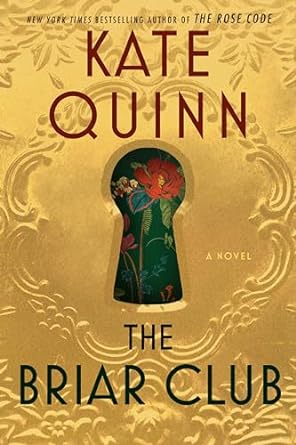
👀 First impressions: Kate Quinn’s The Briar Club whisks readers to post-war Washington, D.C., where a boarding house full of women hides far more than laundry lines and polite tea parties. As the Cold War looms and political paranoia seeps through the city, each resident of the Briar Club carries secrets, some dangerous, some heartbreaking, and some that could change everything. Quinn’s knack for weaving historical detail with page-turning suspense is on full display, blending the intimacy of a domestic drama with the stakes of a spy thriller.
✅ What I Liked: The character work is the novel’s greatest strength. Each woman feels distinct, with her own voice, backstory, and motivations. Quinn paints a vivid picture of 1940s D.C., from the political undercurrents to the small domestic details that bring the setting to life. The shifting points of view create a rich tapestry of intersecting lives, and the mystery unfurls with just enough breadcrumbs to keep you hooked without giving the game away too soon.
❎ What I didn’t Like: The pace occasionally stutters, particularly in the middle third, when the focus leans heavily into backstory at the expense of forward momentum. While the multiple POVs are a strength, a couple of characters felt underdeveloped compared to the rest, leaving me wishing for a bit more balance in their arcs.
📚 Why You Should Read This Book: If you love historical fiction with strong female leads, layered intrigue, and a touch of espionage, The Briar Club delivers. It’s a story of found family, resilience, and the dangerous power of secrets, perfect for fans of Fiona Davis or Beatriz Williams.
💭 Final Thoughts: The Briar Club is a compelling mix of mystery, drama, and historical richness. Kate Quinn’s ability to blend authentic period detail with suspenseful storytelling makes this a satisfying read that lingers after the final page. While not flawless, it’s an engrossing novel that’s both atmospheric and emotionally resonant.
You know the type. The walking red flag in a leather jacket. The charming liar. The brooding monster with a tragic backstory and no emotional regulation. The boyfriend your friends would warn you about, but who you still wouldn’t block on WhatsApp.
This week, we’re diving into the fictional world of bad boyfriends, the ones we shouldn’t love, but kind of do. Or maybe the ones we absolutely don’t, and that’s what makes the story so satisfying.
So whether you’re in the mood for toxic romance, redemptive arcs, or straight-up “girl, RUN” energy, here are five books featuring boyfriends you’ll either swoon for or scream at.
Bad boyfriend vibes: Ryle. Oh, Ryle. Why he’s bad: He’s charming at first… until he’s not. This book isn’t just romance, it’s a powerful portrayal of cycles of abuse and the strength it takes to break them. Hot or not: Not. But necessary reading.
Bad boyfriend vibes: Edward Cullen, the sparkliest gaslighter of them all. Why he’s bad: Controls who she sees, watches her sleep, leaves her in the woods, then comes back like nothing happened. Hot or not: Peak toxic teen dream. Still iconic. Don’t @ me.
Bad boyfriend vibes: Tamlin, the High Lord of red flags. Why he’s bad: Possessive, emotionally manipulative, locks her in the house. Hot or not: Was hot… until He Who Rhymes with Riceand showed up. Then suddenly Tamlin who?
Bad boyfriend vibes: Tom Benton. Why he’s bad: Arrogant, sleazy, and the actual worst. Hot or not: NOT. But Adam, the real love interest? Smouldering, grumpy, slow-burn perfection.
Bad boyfriend vibes: Nick Dunne… and honestly, Amy too. Why he’s bad: Cheats. Lies. Gets manipulated within an inch of his life. Hot or not: Messy. Everyone’s awful. You’ll love it.
Final Thoughts
Sometimes a bad boyfriend makes for a great plot. Whether he’s toxic, tragic, or just terminally annoying, he brings drama, and we’re here for it (in fiction only, obviously).
These stories remind us that love isn’t always soft or simple. And sometimes, walking away is the most powerful ending of all.
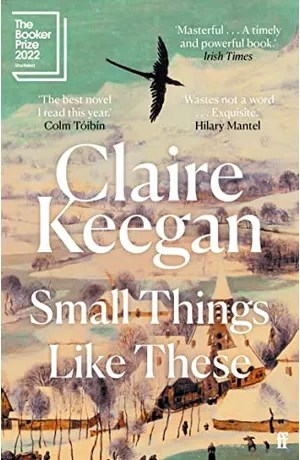
👀 First impressions: Set in a small Irish town during the weeks leading up to Christmas in 1985, Small Things Like These is a spare, luminous novella that speaks volumes in very few words. Claire Keegan, known for her precise and elegant prose, draws inspiration from the true and tragic history of Ireland’s Magdalene laundries, institutions run by the Catholic Church where “fallen” women were exploited and abused.
The story follows Bill Furlong, a coal merchant and family man whose simple life begins to shift when he delivers coal to a convent and makes a disturbing discovery. As the snow falls and the town bustles with Christmas preparations, Bill is forced to confront uncomfortable truths. not just about the Church’s power, but about the cost of silence and the courage it takes to act against injustice.
✅ What I Liked: Keegan’s writing is deceptively simple but full of emotional resonance. Every sentence feels deliberate. The atmosphere, cold, quiet, heavy with snow and suppressed guilt, is beautifully rendered. Bill is a humble and deeply human character, shaped by his own upbringing and haunted by the feeling that looking away makes one complicit.
The novella’s brevity is its strength: in under 120 pages, Keegan crafts a layered, morally rich story that lingers long after you finish it. It’s a masterclass in restraint, nothing is over-explained, and yet the emotional weight is profound. This is the kind of book that makes you pause, reflect, and reread.
❎ What I didn’t Like: While the spare style is part of its power, some readers might find it too understated. The ending, though quietly defiant, leaves a lot unresolved, more a moment of decision than a traditional resolution. If you’re looking for dramatic action or full closure, this might feel a little too open-ended
📚 Why You Should Read This Book: Perfect for fans of literary fiction, novellas, or morally complex stories. It’s a poignant, thought-provoking read you can finish in an afternoon but will be thinking about for days. Ideal for readers who appreciate sparse, lyrical prose and quiet acts of resistance.
💭 Final Thoughts: Small Things Like These is a small book with a large heart. With grace and precision, Claire Keegan explores complicity, courage, and the quiet strength it takes to do the right thing when no one is watching. It’s a quietly devastating gem that deserves its place on modern reading lists, and on your shelf.





 Minnie's Fiction Addiction