You know the type. The walking red flag in a leather jacket. The charming liar. The brooding monster with a tragic backstory and no emotional regulation. The boyfriend your friends would warn you about, but who you still wouldn’t block on WhatsApp.
This week, we’re diving into the fictional world of bad boyfriends, the ones we shouldn’t love, but kind of do. Or maybe the ones we absolutely don’t, and that’s what makes the story so satisfying.
So whether you’re in the mood for toxic romance, redemptive arcs, or straight-up “girl, RUN” energy, here are five books featuring boyfriends you’ll either swoon for or scream at.
Bad boyfriend vibes: Ryle. Oh, Ryle. Why he’s bad: He’s charming at first… until he’s not. This book isn’t just romance, it’s a powerful portrayal of cycles of abuse and the strength it takes to break them. Hot or not: Not. But necessary reading.
Bad boyfriend vibes: Edward Cullen, the sparkliest gaslighter of them all. Why he’s bad: Controls who she sees, watches her sleep, leaves her in the woods, then comes back like nothing happened. Hot or not: Peak toxic teen dream. Still iconic. Don’t @ me.
Bad boyfriend vibes: Tamlin, the High Lord of red flags. Why he’s bad: Possessive, emotionally manipulative, locks her in the house. Hot or not: Was hot… until He Who Rhymes with Riceand showed up. Then suddenly Tamlin who?
Bad boyfriend vibes: Tom Benton. Why he’s bad: Arrogant, sleazy, and the actual worst. Hot or not: NOT. But Adam, the real love interest? Smouldering, grumpy, slow-burn perfection.
Bad boyfriend vibes: Nick Dunne… and honestly, Amy too. Why he’s bad: Cheats. Lies. Gets manipulated within an inch of his life. Hot or not: Messy. Everyone’s awful. You’ll love it.
Final Thoughts
Sometimes a bad boyfriend makes for a great plot. Whether he’s toxic, tragic, or just terminally annoying, he brings drama, and we’re here for it (in fiction only, obviously).
These stories remind us that love isn’t always soft or simple. And sometimes, walking away is the most powerful ending of all.
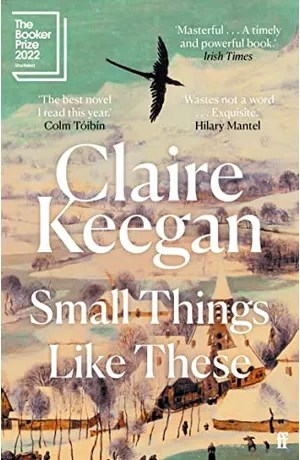
👀 First impressions: Set in a small Irish town during the weeks leading up to Christmas in 1985, Small Things Like These is a spare, luminous novella that speaks volumes in very few words. Claire Keegan, known for her precise and elegant prose, draws inspiration from the true and tragic history of Ireland’s Magdalene laundries, institutions run by the Catholic Church where “fallen” women were exploited and abused.
The story follows Bill Furlong, a coal merchant and family man whose simple life begins to shift when he delivers coal to a convent and makes a disturbing discovery. As the snow falls and the town bustles with Christmas preparations, Bill is forced to confront uncomfortable truths. not just about the Church’s power, but about the cost of silence and the courage it takes to act against injustice.
✅ What I Liked: Keegan’s writing is deceptively simple but full of emotional resonance. Every sentence feels deliberate. The atmosphere, cold, quiet, heavy with snow and suppressed guilt, is beautifully rendered. Bill is a humble and deeply human character, shaped by his own upbringing and haunted by the feeling that looking away makes one complicit.
The novella’s brevity is its strength: in under 120 pages, Keegan crafts a layered, morally rich story that lingers long after you finish it. It’s a masterclass in restraint, nothing is over-explained, and yet the emotional weight is profound. This is the kind of book that makes you pause, reflect, and reread.
❎ What I didn’t Like: While the spare style is part of its power, some readers might find it too understated. The ending, though quietly defiant, leaves a lot unresolved, more a moment of decision than a traditional resolution. If you’re looking for dramatic action or full closure, this might feel a little too open-ended
📚 Why You Should Read This Book: Perfect for fans of literary fiction, novellas, or morally complex stories. It’s a poignant, thought-provoking read you can finish in an afternoon but will be thinking about for days. Ideal for readers who appreciate sparse, lyrical prose and quiet acts of resistance.
💭 Final Thoughts: Small Things Like These is a small book with a large heart. With grace and precision, Claire Keegan explores complicity, courage, and the quiet strength it takes to do the right thing when no one is watching. It’s a quietly devastating gem that deserves its place on modern reading lists, and on your shelf.
There’s something comforting about a perfect hero, the kind of character who always says the right thing, wins the fight, and gets the happy ending tied up with a bow. These paragons of virtue have their place, offering escapism and the satisfaction of justice served.
But lately, I find myself gravitating toward characters who are a little… off. Not just morally grey (though I love those too), but truly weird, awkward, socially catastrophic, or chronically bad at making life choices. These are the characters who stumble through their narratives with all the grace of someone trying to carry too many grocery bags while unlocking their front door in the rain.
You know the ones I mean. The characters who mean well but leave chaos in their wake. Who lie for absolutely no reason and then panic about it for the next fifty pages. Who make spectacularly terrible decisions and spend the rest of the book trying to untangle the mess they’ve created, often making it worse in the process. The ones who would absolutely be your favorite disaster friend in real life, the person you’d simultaneously want to shake and hug.
The Beautiful Truth of Broken People
Weird characters feel achingly human in a way that perfect heroes simply can’t. They remind us that being the protagonist of your own story doesn’t mean having everything figured out, it just means you’re the one making the mistakes and living with the consequences. These characters give us permission to be flawed, to stumble, to be spectacularly wrong about things that matter.
Consider the character who falls desperately in love with someone completely unsuitable and refuses to acknowledge the obvious red flags fluttering like surrender banners in the wind. Or the one who steals a horse in a moment of panic with absolutely zero plan for what happens next, suddenly finding themselves a confused horse thief with nowhere to go. There’s the protagonist who, despite being the only non-magical person in a world brimming with spells and sorcery, still insists on trying to run the entire magical government through sheer stubborn determination and color-coded filing systems.
These characters matter because they show us that growth isn’t about starting perfect, it’s about starting somewhere honest. If a character begins their journey as a paragon of virtue, where can they possibly go? But if they start as what I lovingly call a “goblin gremlin creature” who communicates primarily through sarcasm and questionable life choices, the possibilities for transformation become endless and electric.
The Magic of Mess
There’s something deeply satisfying about watching a character who begins the story as an absolute trainwreck slowly, painfully, hilariously learn to become a slightly more functional trainwreck. It’s not about fixing them, it’s about watching them learn to work with their particular brand of chaos rather than against it.
These characters often possess a specific kind of wisdom that comes only from having spectacularly messed up. They know what it feels like to hit rock bottom, to disappoint people you care about, to lie awake at three in the morning replaying every terrible decision you’ve made since middle school. This hard-won understanding makes their eventual moments of clarity, kindness, or courage feel earned rather than given.
Some Favorite Beautiful Disasters
Here are a few books I’ve treasured specifically because their characters were magnificent hot messes:
Nora Seed in The Midnight Library embodies that particular kind of depression where you’re not just sad, you’re disappointed in yourself for being sad, creating a recursive loop of misery. Her journey through infinite possible lives wasn’t just existential; it was deeply, recognizably human in its messiness and ultimate hopefulness.
Aziraphale and Crowley in Good Omens represent six thousand years of being terrible at their respective jobs while being excellent at friendship. An angel and demon equally baffled by human behavior, hopelessly in denial about their own feelings, and constantly bickering like an old married couple who can’t agree on restaurant choices.
Claire in The Dead Romantics gives us the beautiful disaster of a ghostwriter who can see actual ghosts, spiraling through grief and a brutal breakup with all the grace of a caffeinated raccoon. Her chaos feels authentic, the kind of mess that comes from being handed more than any reasonable person should have to handle.
The entire cast of The Atlas Six proves that being gifted doesn’t equal being stable. Watching a group of brilliant, talented individuals systematically implode while trying to save the world is both entertaining and oddly comforting—genius-level intellect apparently doesn’t protect you from making devastatingly poor romantic choices.
A Quiet Kind of Magic
There’s something profoundly magical about reading stories of people who don’t have their lives together but keep trying anyway. Characters who screw up monumentally, sometimes apologize (or don’t), learn nothing or everything from their mistakes, and somehow keep moving forward. It’s not just entertaining, it’s validating in a way that perfect heroes can never be.
These stories remind us that having your life together is less important than being willing to keep living it, even when you’re making it up as you go along. They show us that being weird, awkward, or chronically bad at traditional success doesn’t disqualify you from being worthy of love, adventure, or your own compelling narrative.
Here’s to the Chaos
In a world that often demands we present polished versions of ourselves, there’s radical comfort in stories that celebrate our rough edges. These characters give us permission to be authentically messy, to make mistakes that matter, to grow in directions we never expected.
So here’s to the weirdos, the oddballs, the unhinged narrators and loveable disasters who populate our favorite stories. Here’s to the characters who remind us that the most interesting people are rarely the most together ones, and that sometimes the best thing you can do is learn to love your own particular brand of beautiful chaos.
I will follow these magnificent messes into any story, any world, any adventure—because they remind me that being perfectly imperfect is not just enough, it’s exactly right.
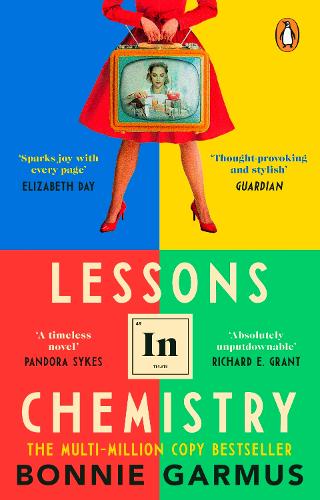
👀 First impressions: Lessons in Chemistry was one of the breakout debut novels of recent years, praised for its quirky blend of feminism, science, and satire. Set in 1960s California, it follows Elizabeth Zott, a brilliant chemist navigating a patriarchal scientific world that continuously underestimates her. When her career takes an unexpected turn and she becomes the star of a wildly popular cooking show, Elizabeth uses the platform to challenge gender roles, teaching housewives chemistry under the guise of making dinner.
The book blends fiction with real-life frustrations faced by women in STEM, and its sharp concept and distinctive tone promised a fresh take on historical feminist fiction. With a dog that thinks in full sentences and a precocious daughter in the mix, it aims to be both heartfelt and humorous.
✅ What I Liked: The central message, about women’s potential being stifled by systemic sexism, is powerful and still timely. Elizabeth Zott is an unusual and memorable character: unapologetically intelligent, determined, and emotionally guarded. Her resistance to conformity is admirable, and Garmus’s writing has flair, particularly in her dry wit and sharply observed moments of social commentary.
Six-Thirty, the dog, is a surprise highlight. His perspective adds an unexpected tenderness and humour that balances out some of the heavier themes. And Mad, Elizabeth’s daughter, is wonderfully drawn: curious, wise beyond her years, and heartbreaking in her quiet resilience.
❎ What I didn’t Like: The tone often felt uneven. At times it reads like a zany, almost whimsical satire, and at other moments it tries to be a deeply emotional, grounded story of trauma and injustice, but the transitions don’t always feel smooth. The character of Elizabeth, while admirable in theory, can come across as implausibly perfect or emotionally flat, making it difficult to fully connect with her journey.
Some plot points stretched credibility, and the secondary characters often felt like caricatures—particularly the male villains, who lacked nuance. While the novel aims to critique gender stereotypes, it sometimes unintentionally reinforces others in reverse.
📚 Why You Should Read This Book: If you’re looking for a book that blends historical fiction with a strong feminist message, and you enjoy character-driven stories with an unconventional structure, you’ll likely find Lessons in Chemistry both thought-provoking and entertaining. It’s an ideal choice for book clubs and readers who enjoy novels that spark discussion.
💭 Final Thoughts: Lessons in Chemistry is a book with big ideas and a big heart, but not all of its elements come together smoothly. It’s bold and original, with moments of brilliance, but the inconsistent tone and characterisation might leave some readers a little underwhelmed. Still, it’s a debut with a lot to say—and worth reading for its unique approach to feminism and science;
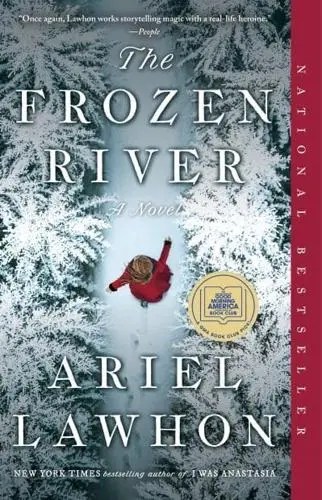
👀 First impressions: The Frozen River is a historical mystery inspired by a real-life 18th-century midwife and healer named Martha Ballard. Set in 1789 Maine, during a particularly bitter winter, the novel draws on the actual diary entries of Martha, reimagining her as a quietly fierce and morally driven woman navigating the brutal realities of frontier life. When the body of a man accused of rape is found frozen in the river, Martha becomes entangled in a web of secrets, lies, and power that threatens her community, and her life.
Ariel Lawhon is known for weaving fact and fiction seamlessly, and this book is no exception. The setting is richly rendered, the stakes feel high, and the courtroom drama, medical detail, and domestic life all combine to create a vivid tapestry of early American society, especially from a woman’s perspective. The novel reads like a slow-burning mystery wrapped in the stark realism of historical fiction.
✅ What I Liked: Martha Ballard is an incredible protagonist. She’s intelligent, practical, and unflinchingly brave, and Lawhon brings her to life with depth and nuance. The atmosphere is superb, icy and tense. and the moral themes are compelling, especially the way the story explores women’s voices and justice in a world that actively tries to silence both.
The narrative structure, alternating between Martha’s present-day investigation and courtroom scenes, keeps the tension taut. Lawhon’s prose is both elegant and grounded, and the historical details, drawn from Ballard’s real diary, give the book a powerful authenticity. It’s also refreshing to read a historical novel where a woman in her fifties is front and center, driving the story with such agency.
❎ What I didn’t Like: The pace can be slow in places, especially in the first third of the novel. While the historical detail is fascinating, it occasionally drags the momentum down. Some secondary characters blur together, and there were moments when the legal proceedings became a bit repetitive.
📚 Why You Should Read This Book: If you’re a fan of historical fiction with a feminist slant, mystery lovers who enjoy a slow-build investigation, or readers interested in underrepresented historical figures, this one is for you. It’s especially rewarding if you appreciate rich atmosphere, complex women, and stories rooted in truth.
💭 Final Thoughts: The Frozen River is a compelling blend of fact and fiction, beautifully written and carefully constructed. It’s a stark look at early American justice through the eyes of a woman whose life and legacy deserve far more recognition. With its evocative setting and sharp moral questions, it’s both a page-turner and a thought-provoker.
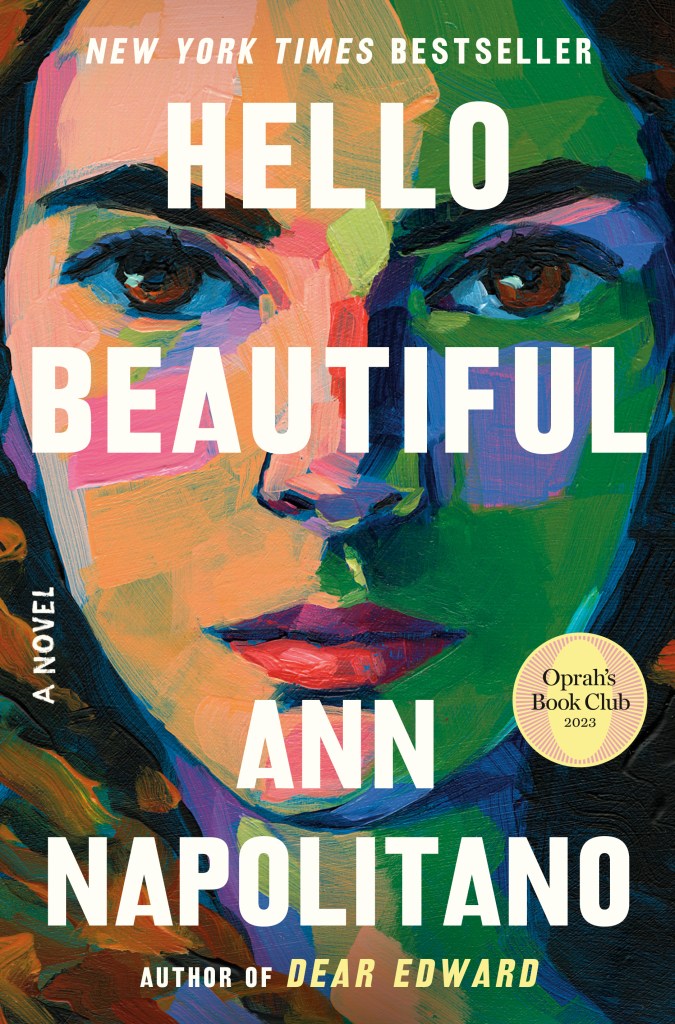
👀 First impressions: The cover caught my eye immediately, elegant, soft, and quietly emotional, much like the novel itself. I’d heard comparisons to Little Women and was curious to see how Napolitano would take a classic sisterhood dynamic and ground it in modern emotional realism.
✅ What I Liked: Napolitano’s writing is gentle and graceful, even when dealing with weighty themes like grief, depression, and fractured family ties. The story of William and the four Padavano sisters unfolds slowly but with purpose. The character work is where this book truly shines, Julia, Sylvie, Cecelia, and Emeline are drawn with such care, each distinct but interconnected like a delicate tapestry.
The emotional beats feel honest. William’s trauma and withdrawal are portrayed with sensitivity, and I appreciated how the novel explores the long-term consequences of mental illness and abandonment without becoming melodramatic. It’s a story about healing, but not in a way that feels too neat or saccharine.
❎ What I didn’t Like: The pacing lagged at times, particularly in the middle third. There were moments when the introspection became a little repetitive, and some characters (especially the quieter sisters) didn’t feel as fully developed as Julia or William. The emotional restraint, while beautiful, also kept me at a bit of a distance as a reader. I admired the book more than I was moved by it in parts.
📚 Why You Should Read This Book: If you enjoy character-driven stories about complex families, personal resilience, and love in all its messy forms, Hello Beautiful is a rewarding read. It’s not fast-paced or plot-heavy, but it has heart and depth in spades. Fans of Elizabeth Strout or Ann Patchett will find a lot to love here.
💭 Final Thoughts: This is a quiet novel with a big emotional footprint. Though not perfect, it’s graceful, tender, and thoughtful. It lingers after the final page in that way only a well-crafted family drama ca
Final Rating ★★★★ – A beautifully written exploration of love, loss, and identity, with just a few pacing issues that held it back from a full five stars.
👀 First impressions: With a title like Margot’s Got Money Troubles, I was expecting a quirky romp. What I got instead was something far richer: a razor-sharp, emotionally raw, and surprisingly tender exploration of womanhood, ambition, and the chaos of financial desperation. Rufi Thorpe writes with guts and honesty, and Margot is a protagonist you won’t soon forget.
✅ What I Liked: Margot is a complicated, unapologetic heroine—which is exactly what makes her so compelling. Broke, aimless, and full of contradictions, she makes a bold decision to enter the adult content world in order to survive and thrive. Her voice is bitingly funny, whip-smart, and brutally self-aware.
Thorpe doesn’t shy away from sex work, class anxiety, or the messiness of female friendship. Instead, she leans in—with honesty, nuance, and zero judgment. The novel touches on everything from hustle culture to digital identity, but it’s also about love: romantic, maternal, and self-love, too.
The writing sparkles with dark humour and pathos. Thorpe balances sharp social commentary with emotional depth, and somehow makes Margot’s often self-sabotaging decisions feel completely understandable.
❎ What I didn’t Like: While Margot’s voice is captivating, she’s also exhausting at times. Her choices are often reckless and frustrating, and there were moments I found myself needing a break from her spiraling thoughts.
The plot, too, is somewhat loose—it’s less about events and more about emotional evolution. Readers looking for a tight, structured narrative might find this meandering at times. But for me, the messiness fit the character.
📚 Why You Should Read This Book: If you liked My Year of Rest and Relaxation by Ottessa Moshfegh or Luster by Raven Leilani, you’ll feel right at home here. This is for readers who love a complicated female lead, unflinching commentary on class and sex, and dark humour wrapped around real vulnerability.
💭 Final Thoughts: Margot’s Got Money Troubles is fierce, funny, and full of heartache. It captures the chaos of trying to stay afloat in an unforgiving world, and the courage it takes to figure out who you are when everything falls apart. Rufi Thorpe has created something bold and biting, with a heroine who’s impossible to ignore.
This week, we’re celebrating the scrappy underdogs, the reluctant saviours, and the oddballs who never meant to be heroes—but saved the day anyway. These stories remind us that courage isn’t about capes or prophecy. Sometimes, it’s about showing up when no one else will, making the hard choice, or just keeping going when everything says you shouldn’t.
So if you’re in the mood for main characters who bumble, protest, or stumble their way into greatness, here are five unforgettable books featuring unlikely heroes:
🪓 Legends & Lattes by Travis Baldree
Hero: Viv the Orc, a retired mercenary Why she’s unlikely: She’s done with bloodshed and wants to open a coffee shop. A coffee shop. In a city that’s never tasted a latte. Why she’s perfect: Viv’s journey is quiet, heartwarming, and fueled by cinnamon rolls, but her bravery in chasing peace makes her more heroic than any battlefield glory
🧼 The House in the Cerulean Sea by TJ Klune
Hero: Linus Baker, a middle-aged bureaucrat Why he’s unlikely: He inspects orphanages and lives a painfully predictable life. Why he’s perfect: Linus is the definition of quiet strength, and his slow transformation is full of charm, heart, and powerful kindness.
🧙♀️ Tress of the Emerald Sea by Brandon Sanderson
Hero: Tress, a girl who collects cups and tells herself she’s ordinary Why she’s unlikely: She doesn’t seek adventure—she just wants to rescue her friend Why she’s perfect: Tress becomes a hero not through strength, but through cleverness, loyalty, and stubborn hope. Plus, the narration is delightfully snarky.
🐦 The Raven Boys by Maggie Stiefvater
Hero: Blue Sargent, the only non-psychic in a house of psychics Why she’s unlikely: She’s been told her kiss will kill her true love. Romance? Adventure? Not for her. Why she’s perfect: Blue might not have magical powers, but she’s brave, smart, and the glue that holds a found family of misfits together.
🧛♂️ Sunshine by Robin McKinle
Hero: Rae “Sunshine” Seddon, a baker Why she’s unlikely: She just wants to make cinnamon rolls, not fight vampires. Why she’s perfect: When she’s kidnapped by the enemy, she discovers power and grit she never imagined. A gorgeously weird, slow-burn urban fantasy.
Final Thoughts
Unlikely heroes show us that you don’t need a chosen-one prophecy to matter. You just need heart. Whether they’re running coffee shops, baking bread, or mumbling their way through magic, these characters are unforgettable because they feel real. They’re not fearless—they’re brave anyway.
Have a favourite unlikely hero of your own? Drop it in the comments! Let’s build the ultimate underdog reading list.
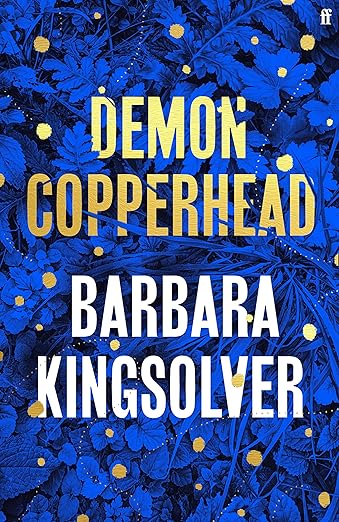
👀 First impressions: I went into Demon Copperhead expecting something literary and layered, but I was not prepared for how immediately I would fall under the spell of its narrator. From the very first page, Demon’s voice crackles with life, humour, and pain. This is a bold reimagining of David Copperfield, but it stands entirely on its own as a modern American epic.
✅ What I Liked: Barbara Kingsolver has achieved something extraordinary with this novel. Demon is one of the most vivid, unforgettable narrators I’ve ever read, wisecracking, vulnerable, and heartbreakingly self-aware. His voice carries the story through poverty, addiction, foster care, and small-town injustice with a mix of defiance and soul that grabs you and doesn’t let go.
Kingsolver’s depiction of life in rural Appalachia is unflinching yet compassionate. She brings sharp social commentary without ever losing sight of the human beings behind the statistics. The writing is lyrical without being showy, grounded in emotional truth. Every secondary character, from the heart-breaking to the grotesque, feels real.
Despite the bleak subject matter, the novel is shot through with hope, humour, and resilience. Demon’s survival feels like an act of rebellion in a world that continually tries to break him. The way Kingsolver honours the original Dickens story while crafting something entirely contemporary is nothing short of brilliant.
❎ What I didn’t Like: Honestly? Very little. Some sections are emotionally heavy, and at times I had to put the book down to process, but that’s more a testament to its power than a flaw. This is a big book in every sense, but it earns every page.
📚 Why You Should Read This Book: Because it’s one of those rare novels that truly makes you feel, furious, heartbroken, uplifted. If you love literary fiction with soul, social conscience, and unforgettable characters, this is a must-read. Fans of Shuggie Bain, The Nickel Boys, or A Little Life will find something equally moving here.
💭 Final Thoughts: Demon Copperhead is storytelling at its absolute finest. Barbara Kingsolver has given voice to the voiceless in a way that is empathetic, blistering, and full of grace. This is a book that will stay with me for a very long time.
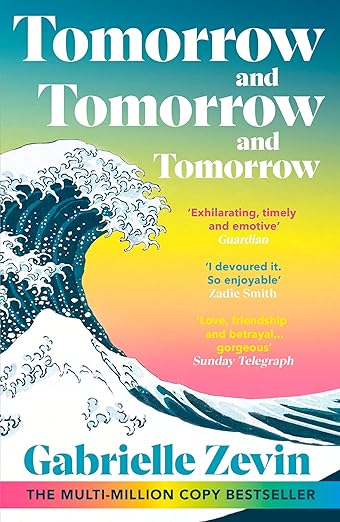
👀 First impressions: Tomorrow, and Tomorrow, and Tomorrow came highly recommended and with a gorgeous premise: two friends bound by creativity, nostalgia, and the video games they make together. As someone who enjoys character-driven literary fiction with unconventional storytelling, I was excited to see what all the buzz was about.
✅ What I Liked: Gabrielle Zevin’s prose is lovely. there’s no doubt about her talent as a writer. The book shines in its exploration of creative partnership, the intensity of collaboration, and how friendship can be as complicated and consuming as any romance.
I loved how Zevin treated video games as a legitimate art form, weaving them into the emotional fabric of the story. Some chapters, especially the more experimental ones (like the side-scrolling narrative), were bold and inventive. The world-building within the games themselves was clever, and the nostalgic touches (especially for ’90s kids and early 2000s gamers) felt authentic and lovingly rendered.
❎ What I didn’t Like: Despite its strengths, I often felt held at arm’s length by the characters. Sam and Sadie are fascinating, but they’re also emotionally closed-off, and I struggled to feel their bond rather than just observe it. Their repeated miscommunications and prolonged silences became frustrating, and I found myself wishing for more emotional payoff or evolution in their relationship.
The pacing also dragged at times, particularly in the middle third. While I appreciated the philosophical depth, the story sometimes meandered, occasionally prioritizing style over momentum.
📚 Why You Should Read This Book: If you enjoy literary fiction with themes of art, identity, and complex friendships, and you’re interested in the intersection of creativity and technology, this book will offer you something unique. It’s a thoughtful novel with plenty of ambition and beautifully crafted scenes.
💭 Final Thoughts: Tomorrow, and Tomorrow, and Tomorrow is undeniably original and thoughtfully written, but for me, it lacked the emotional connection I was hoping for. A compelling read in many ways, just not quite the five-star experience I’d anticipated.


 Minnie's Fiction Addiction