• Alix Summer is a popular podcaster known for documenting the lives of interesting women. One evening, while out celebrating her birthday, she meets Josie Fair — a woman born on the same day, at the same hospital. Josie is quiet, awkward, and strangely fixated on Alix. She proposes herself as a podcast subject, claiming her life story is ready to be told. Intrigued and a little flattered, Alix agrees.

    But as the recordings progress, Josie begins to reveal a disturbing past filled with secrets, manipulation, and trauma. The deeper Alix digs, the more she realises that Josie may not be who she says she is — and that by letting her into her life, Alix has opened a door she may not be able to close. When Josie suddenly disappears, Alix is left at the centre of a story she no longer controls — one that could destroy everything.

    👀 First Impressions:
    From the moment I saw the title and tagline — “You’re not the only one watching” — I knew this was going to be a mind-bending thriller. Lisa Jewell has a knack for twisting reality in the most unsettling ways, and this book promised a blend of podcast culture, unreliable narration, and sinister secrets. I was instantly intrigued by the concept of a podcaster stumbling upon a stranger who insists they’re destined to be friends — and more disturbingly, that their stories are tangled in unexpected ways.

    What I Liked:
    The structure is incredibly compelling — a mix of traditional narrative, podcast transcripts, and interviews that gradually unravel the plot. Jewell masterfully plays with perspective, making you question what’s real and who’s telling the truth. Josie Fair, the so-called “birthday twin” who inserts herself into Alix’s life, is one of the creepiest, most fascinating characters I’ve come across in a long time. She’s written with just the right amount of ambiguity to keep you constantly guessing her motives.

    Alix, the podcaster, is a strong but flawed protagonist. Her reactions feel authentic, especially as the story spirals into darker territory. The pacing is sharp, the tension is relentless, and the ending… well, it’s the kind that makes you want to flip right back to the beginning to hunt for missed clues.

    What Didn’t Work for Me:
    While the format adds a lot of intrigue, the shifts between podcast and prose can occasionally break the flow, especially in the second half when events escalate rapidly. Some readers might find the ambiguity in the resolution a bit frustrating — Lisa Jewell leaves just enough open-ended to make you question everything, which won’t work for everyone.

    💭 Overall Thoughts:
    None of This Is True is a chilling, cleverly constructed psychological thriller that explores obsession, truth, and the blurry line between content creation and exploitation. Jewell’s storytelling is as sharp as ever, and the book lingers long after the last page. Fans of true crime podcasts, unreliable narrators, and stories that keep you second-guessing everything will find a lot to love here.

    🛍️ Where to buy:
    To grab you copy of ‘The Mysterious case of the Alperton Angels visit HERE

    Final Rating ★★★☆☆½
    Twisty and binge-worthy with a chilling premise, but some plot elements stretched believability by the end.
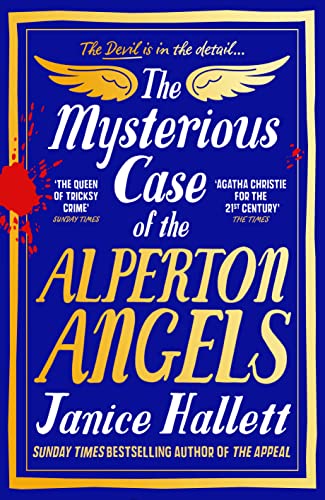
  • Cover of ‘The Mysterious case of the Alperton Angels by Janice Hallett, published by Viper

    True-crime author Amanda Bailey is investigating the chilling case of the Alperton Angels, a doomsday cult whose members believed a teenage girl was about to give birth to the Antichrist. Nearly two decades after a bloody night that left several people dead, Amanda is trying to track down the now-adult baby for a new book. But as she digs deeper, she discovers that the official story might not be the truth—and the people involved may still be in danger. Told through emails, interviews, WhatsApp messages, and documents, the novel pieces together the mystery one puzzle fragment at a time.

    The premise centres on a revolutionary DNA test that promises to match people with their one true soulmate, the perfect partner, genetically destined for them. As millions around the world sign up and relationships are transformed, the novel follows five characters whose lives are upended by their matches.

    👀 First impressions:
    I wasn’t sure the format of this book—entirely composed of emails, transcripts, notes, and messages—would be something I’d enjoy or even be able to follow. It seemed like it could get confusing quickly, but my fears were soon allayed. Janice Hallett has a real talent for making this format not only work but become part of the story’s immersive appeal. The opening drew me in fast, with just enough intrigue and shadowy cult backstory to hook my interest.

    What I liked:
    The found-document structure is clever and surprisingly effective. It allows you to feel like a detective combing through the case yourself. Amanda Bailey is a compelling, slightly unreliable narrator. Her professional ambition and personal motivations add complexity. The mystery builds steadily, with layers of truth and deception gradually unraveling. It’s the kind of book that rewards close attention. Hallett’s use of multiple perspectives and voices is well executed, with distinct tones and personalities shining through the unconventional format.

    What I didn’t like:
    There were moments when the pace dragged, especially during long email exchanges or detailed transcripts that felt more expository than necessary. The resolution, while twisty, left a few loose ends and didn’t feel quite as satisfying as I hoped after such a strong build-up.

    📚 Why you should read this book:
    If you’re a fan of metafiction, true crime, or stories that blur the line between author and investigator, this book will likely appeal to you. It’s a unique, engaging experience—perfect for readers who like something a little different. Hallett’s signature format gives you the sensation of being directly involved in the investigation, and the central mystery is just creepy and cultish enough to keep you turning the pages.

    💭 Overall Thoughts:
    The Mysterious Case of the Alperton Angels is a smart, layered novel that plays with form and structure in inventive ways. Though it wasn’t perfect for me, and some parts felt a bit slow or overly complex, I admired its originality and enjoyed the mystery at its core. This is a book that sticks with you—not because of explosive action or shocking revelations, but because of its atmosphere, clever construction, and the unsettling question of what truth really looks like.

    Final Rating ★★★★☆
    Twisty and binge-worthy with a chilling premise, but some plot elements stretched believability by the end. – A clever, dark, and addictive thriller that asks: what if science could find your perfect match — and at what cost?

    🛍️ Where to Buy

    You can purchase ‘The Mysterious Case of the Alperton Angels HERE

  • Photo by Rhamely on Unsplash

    I have a dream — one that sits in the back of my mind every time I scroll through Instagram vanlife accounts, watch travel vlogs, or stand in a bookshop thinking, “Where would I read this if I were somewhere beautiful?”

    I want to buy a camper van.
    Not just any camper van, my home on wheels. A cozy, tiny, mobile haven where I can travel across the UK and Europe, taking long walks in stunning places and reading books everywhere I go.

    This dream is about more than just the van. It’s about freedom, discovery, and feeding two of my deepest loves: reading and walking.

    🚐 Why a Camper Van?

    For me, the appeal of a camper van isn’t luxury.
    It’s not about Instagram-worthy interiors or fancy setups.
    It’s about flexibility.

    A camper van means I can wake up by a Scottish loch one week and sip coffee on the French coast the next.
    It means I can chase good weather, explore hidden countryside spots, and pull over when a view takes my breath away.
    It means no rigid schedules, no hotel check-ins, no worrying about sticking to one place for too long.

    In short: it’s the perfect setup for someone who dreams of wandering — with no ties and no plan except where the road leads.

    📚 A Journey Built Around Books

    Part of this dream is deeply tied to my love of reading.
    I don’t just want to see places, I want to read in them.

    Imagine:
    – Finishing a mystery novel on the cliffs of Cornwall, the sea crashing below.
    – Reading a historical novel inside a medieval walled town in France.
    – Sitting under the stars in the Lake District, wrapped in a blanket with a fantasy book in hand.

    Every stop would become part of my reading journey, blending story worlds with real ones.
    My van would carry a carefully curated bookshelf, packed with paperbacks and maybe a Kindle loaded with backup titles (because let’s be honest, one shelf won’t be enough).

    Books would be my travel companions.
    They’d shape how I see each place and each place would shape how I experience each book.

    🥾 Walking Through the World

    Photo by Irina Iriser on Unsplash

    Alongside reading, walking is my other great love.
    For me, a good walk is more than exercise, it’s meditationexploration, and freedom.

    In my camper van dream life, every morning starts with a walk:
    – Through ancient forests in Germany.
    – Along misty coastal paths in Wales.
    – Across sunlit vineyards in France.
    – Up craggy mountains in the Scottish Highlands.

    Walking lets me slow down and connect with the land in a way no bus tour or car trip ever could.
    It’s how I clear my mind, reflect on the stories I’m reading, and soak in the small, quiet details of the world.

    💭 What Would Life Look Like?

    I picture my van, maybe a Citroën Relay or a Fiat Ducato, something not too big but roomy enough for comfort.
    Inside: a bed with soft blankets, a little kitchenette, shelves lined with books, a reading lamp, and space for hiking boots, maps, and a folding chair for outdoor reading spots.

    Each day would have its own rhythm:
    Wake up with the sunrise, make a cup of coffee, take a long walk.
    Come back, cook something simple, sit with a book.
    Drive a little, maybe to a lake, a forest, a pretty village.
    Spend the afternoon exploring or curled up inside if it’s rainy.
    At night, read by fairy lights, listen to the wind or waves, and fall asleep knowing tomorrow holds another adventure.

    It’s not a fast-paced life. It’s not glamorous or perfect.
    But it’s mine, shaped by what I love, done at my own pace.

    🌍 Why the UK and Europe?

    I love the idea of traveling across both the UK and mainland Europe because there’s so much variety packed into a relatively small area.

    The UK alone offers endless landscapes:
    – The rugged beauty of the Highlands.
    – The peaceful rolling hills of the Cotswolds.
    – The dramatic coasts of Wales and Cornwall.
    – Hidden countryside villages with ancient pubs and walking trails.

    And then, hop across to Europe:
    – Wander through alpine towns in Austria.
    – Park by lavender fields in Provence.
    – Explore crumbling castles along the Rhine.
    – Walk along Portuguese cliffs or Italian vineyards.

    Every few weeks, the scenery changes completely, new language, new food, new history.
    But my little van stays the same, a home base that travels with me wherever I go.

    💸 The Practical Side (and the Dreaming)

    Of course, dreams like this don’t come cheap.
    Buying and converting a camper van takes money, time, and planning. There are insurance costs, campsite fees, ferry tickets, fuel, maintenance, and the endless small costs that come with long-term travel.

    But dreaming is the first step.
    For now, I’m researching, learning, saving, and figuring out what would make this dream real.
    Maybe I start with short trips, a few weeks here and there.
    Maybe I work remotely on the road.
    Maybe I find creative ways to make it happen over time.

    The point is: the dream is there, and it’s something I’m working toward.

    💬 Why This Dream Matters

    For me, this dream isn’t just about travel, it’s about living in a way that aligns with who I am.

    It’s about creating a life where I can read, walk, explore, and breathe, not rushing from one obligation to the next, not being stuck in one place or one routine.
    It’s about embracing curiosity, following where stories and roads lead, and making memories shaped by books and landscapes alike.

    Maybe one day, I’ll look back and think:
    That was the year I made the dream real.
    That was the year I turned the road into my home.

    And when I do, I hope my bookshelf is right there with me, packed into the van, ready for every page and every mile ahead.

    💬 Do you dream about life on the road? Have you ever wanted to travel in a camper van or take your books and boots on an adventure?
    Share your thoughts in the comments, I’d love to hear your travel dreams and maybe swap some inspiration!

  • Cover of Yellowface by RF Kuang, published by The Borough Press

    Book Summary:
    Yellowface follows June Hayward, a struggling white writer who witnesses the sudden death of her friend, Athena Liu, a brilliant and celebrated Asian American author. In a split-second decision, June steals Athena’s unpublished manuscript and publishes it under the ambiguous name “Juniper Song.” As June’s literary star rises, she’s forced to navigate a world of fame, guilt, and mounting suspicion. What unfolds is a razor-sharp exploration of cultural appropriation, privilege, identity, and the cutthroat world of publishing, all told through the eyes of a deeply flawed, unreliable narrator.

    👀 First Impressions:
    This book is wild, in the best way. I went into Yellowface knowing it would tackle big, thorny topics, but I didn’t expect it to be this sharp, addictive, and unsettling. From the very first chapter, it pulls you into the messy world of publishing, privilege, and cultural appropriation, and it’s impossible to look away. As someone who enjoys character-driven, provocative novels, I was hooked right away and couldn’t wait to see just how far things would spiral.

    What I Liked:
    June Hayward is the kind of narrator you love to hate, selfish, insecure, and delusional in the most fascinating way. As the story progressed, I found myself growing to actively dislike her, which actually made the reading experience even more compelling. Watching her twist herself into knots trying to justify every terrible decision was like witnessing a slow-motion train wreck. R.F. Kuang does an incredible job of making you cringe while still keeping you glued to the page.

    One of the biggest strengths of the book is how it skewers the publishing world, from the politics of who gets a seat at the table to the brutal realities of online discourse and social media pile-ons. The commentary feels brutally realistic, especially in how it captures the speed and intensity of public backlash and cancel culture. The writing is sharp, darkly funny at times, and packed with biting observations.

    What Didn’t Work for Me:
    I’ll hold back on details here for fear of spoilers, but I will say some parts dragged a little and I wanted more from the ending.

    📚 Why You Should Read This Book:
    If you love morally messy characters, dark humor, and books that make you think, Yellowface is absolutely worth picking up. It’s a razor-sharp look at privilege, identity, authorship, and the ugly side of the creative world. This is the kind of novel that sparks conversations and lingers in your mind long after you finish. Whether you’re drawn in by the scandal, the social critique, or just a juicy, propulsive plot, there’s a lot here to chew on.

    💭 Overall Thoughts:
    Yellowface is clever, thought-provoking, and uncomfortably entertaining. It’s a book that made me wince, laugh, and reflect, sometimes all in the same chapter. While not perfect, it’s one of those novels that sticks with you and makes you eager to discuss it with others. Highly recommended if you want something smart, edgy, and a little bit ruthless.

    Final Rating ★★★★☆ Smart, satirical, and razor-sharp, a bold commentary on authorship, race, and the publishing world that’s as entertaining as it is uncomfortable.

    🛍️ Where to buy:
    To buy your own copy of Yellowface vist HERE

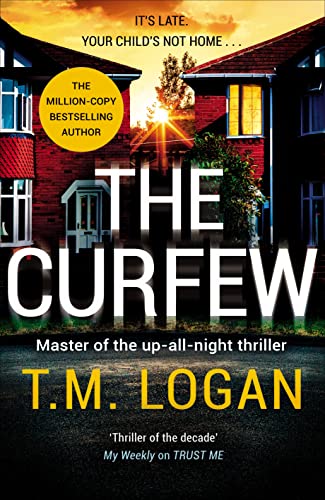
  • Cover of The Curfew by TM Logan, published by Zaffre

    👀 First Impressions:
    As someone who reads a lot of thrillers, I was curious to see how The Curfew would measure up. The story centres on a group of teenagers who break their curfew one night, and when one of them goes missing, long-buried secrets begin to surface. The fallout pulls their parents into a tense and tangled web of suspicion, lies, and desperation. It sounded right up my street.

    What I Liked:
    The pacing was strong, with short, punchy chapters that kept me turning the pages. I enjoyed the family dynamics and the way Logan captures the unease and paranoia as suspicion falls on different characters. There were some clever twists and moments that genuinely surprised me.

    What Didn’t Work for Me:
    While the buildup was gripping, the ending didn’t quite land for me.  I was hoping for one last shocking twist, but it wrapped up much as I expected. A few character motivations also felt a little shaky or convenient, which took away from the believability of the resolution. A factor that plays a part in the overall rating I give this book.  

    📚 Why You Should Read This Book:
    If you enjoy domestic thrillers with plenty of secrets, twists, and suspense, The Curfew delivers a gripping ride. It’s perfect for readers who like stories about ordinary families caught in extraordinary circumstances, and it raises interesting questions about trust, loyalty, and how far we’ll go to protect the people we love.

    💭 Final Thoughts:
    The Curfew is an entertaining, fast-paced thriller that kept me engaged, but it didn’t quite stick the landing. If you enjoy domestic thrillers with plenty of suspense, it’s still worth picking up — just be prepared for an ending that might leave you wanting a little more.

    Final Rating: ★★★☆☆½
    A fast-paced domestic thriller with plenty of twists, though some plot points felt a bit too convenient to fully satisfy.

    🛍️ Where to buy:
    Buy your own copy of The Curfew HERE

  • Whether you’re stuck in a reading rut or just craving something new, this week’s What to Read Wednesday has you covered. From gripping thrillers to poignant memoirs, here are seven standout reads to add to your TBR this week.

    🔍 1. Thriller: The Last Thing He Told Me by Laura Dave

    When Hannah’s husband disappears, all he leaves behind is a note: “Protect her.” That “her” is his teenage daughter, and together they must unravel the mystery he left behind. Tense, emotional, and compulsively readable, this is a thriller that doubles as a character study.

    🧠 2. Psychological Fiction: The Push by Ashley Audrain

    Motherhood isn’t always what it seems. This chilling novel explores the dark side of maternal instinct and legacy. Perfect for fans of complex, unsettling stories that linger long after the final page.

    🏛️ 3. Historical Fiction: The Nickel Boys by Colson Whitehead

    Based on the real-life horrors of a Florida reform school, this Pulitzer Prize-winning novel follows two boys whose paths diverge in tragic ways. A searing, unforgettable look at injustice and survival in Jim Crow America.

    📓 4. Memoir: Crying in H Mart by Michelle Zauner

    Indie rock star Michelle Zauner reflects on her Korean-American identity, the loss of her mother, and the healing power of food. It’s tender, raw, and full of flavour in every sense.

    🌿 5. Nature Writing: The Salt Path by Raynor Winn

    What happens when you lose your home and your future? You walk. This beautiful memoir charts the 630-mile journey of Raynor and her husband along the South West Coast Path — a moving story of resilience, healing, and reconnecting with nature.

    ⚡ 6. Speculative Fiction: The Power by Naomi Alderman

    In a world where women suddenly gain the power to release electric jolts from their hands, everything changes — politics, religion, and society itself. This thought-provoking novel turns gender dynamics on their head and asks: what would happen if the power shifted?

    ⚖️ 7. Political / Legal Drama: Anatomy of a Scandal by Sarah Vaughan

    A privileged politician, a courtroom trial, and a scandal that goes deeper than anyone expected. This smart and timely novel dives into issues of consent, justice, and reputation in the public eye.

    ✍️ Final Thoughts

    hese books are powerful, sharp, and deeply human, each one offering something thought-provoking, whether you’re into courtroom dramas, nature memoirs, or dark psychological tales.

    Which one will you be picking up first?

  • Photo by Ján Čorba on Unsplash

    In the age of Goodreads, Amazon, and endless book blogs, star ratings have become a go-to shorthand for readers to share their opinions. But somewhere along the way, the meaning of those stars has shifted and “3 stars” has unfairly earned a reputation as a negative or dismissive review.

    It’s time to rethink that. Here’s why a 3-star rating is not a bad review and why readers and authors alike should see it as a valuable part of the conversation.

    Three stars mean “good,” not “terrible.”

    Most rating systems, whether for books, films, restaurants, or products, are designed on a scale where:

    • 5 stars = outstanding/exceptional
    • 4 stars = very good
    • 3 stars = good/solid
    • 2 stars = fair/disappointing
    • 1 star = poor/bad

    In other words, 3 stars usually mean “I liked it” or “it was enjoyable, but not a favourite.” It’s not a punishment or a condemnation, it’s an honest acknowledgement that the book had strengths but didn’t completely wow the reader.

    Many books fall into this middle ground, and that’s perfectly normal.

    As someone who reviews a lot of books, I can say I’ve given plenty of 3-star ratings to books I genuinely enjoyed, they entertained me, kept me company on a rainy afternoon, or made for the perfect holiday read, even if they didn’t leave a lasting impact.

    Three-star reviews are often the most balanced

    A lot of readers trust 3-star reviews because they tend to offer a mix of praise and constructive criticism. These reviews often highlight what worked and what didn’t, which can be incredibly useful for both potential readers and authors.

    Rather than gushing or ranting, a 3-star review might say: “Great setting and concept, but I struggled with the pacing” or “Loved the characters, but the plot felt predictable.”

    That kind of thoughtful feedback helps readers decide whether a book is a good fit for them, and it can also help authors grow. As a reviewer, I actually enjoy writing 3-star reviews because they let me talk honestly about both the high points and the areas that didn’t fully land. It feels like a genuine conversation with fellow readers.

    Not every book needs to be a five-star favourite

    We all have limited time, and let’s be honest, not every book we read will change our lives. A 3-star book can still offer an enjoyable reading experience, fill a quiet afternoon, or provide the perfect holiday escape.

    Sometimes a book is “good enough” and that’s still a win! Not every book needs to earn a place on the “best of the year” list to be worth reading. Some of my most satisfying reading moments have come from 3-star books, they might not have been unforgettable, but they were exactly what I needed at the time.

    There’s an ongoing debate on social media

    In recent months, platforms like X (formerly Twitter), Threads, and Bookstagram have seen lively discussions around whether a 3-star review counts as “good.” Some authors have even asked readers not to post reviews if they rate the book below 4 stars, arguing that lower ratings can hurt visibility and sales due to algorithms on sites like Amazon and Goodreads.

    On the flip side, many readers and reviewers push back, saying that honest, balanced reviews, even with a 3-star rating, are vital to building trust and credibility in the book community. After all, not every reader will have the same taste, and reviews should reflect that diversity of opinion.

    But many authors actually appreciate 3-star reviews and understand their value. As author Jaz Pate (@jazpate_writes) recently shared:
    “As an author 3 stars is good 👍 it wasn’t the best thing ever for them to read but it was good. I love a 3 star I have on my first book because that reader HATED one of my characters and I thought it was hilarious 😂.”

    This perspective shows that not all authors see 3 stars as a blow, some even welcome the humor or honesty they bring.

    Variety in reviews creates a richer conversation

    If every review were five stars, reviews would lose their meaning. Diversity in opinions helps create a vibrant, honest conversation about books. A 3-star review tells part of that story and adds nuance to the overall picture.

    Authors benefit from fair, thoughtful reviews

    Many authors will tell you they appreciate genuine, balanced reviews more than automatic praise. A 3-star review can highlight areas of strength and identify opportunities for growth. It shows that the reader engaged with the book and took the time to reflect on their experience, and that’s valuable feedback.

    Final Thoughts

    Three-star reviews are not insults they’re often thoughtful, fair, and constructive. They acknowledge both the strengths and weaknesses of a book and contribute to a more honest reading community.

    So the next time you see (or leave) a 3-star rating, remember: it’s not a sign of failure. It’s a sign that the book was good, enjoyable, and worth talking about even if it didn’t become an instant favourite. And from my experience as both a reader and reviewer, that’s something worth celebrating.

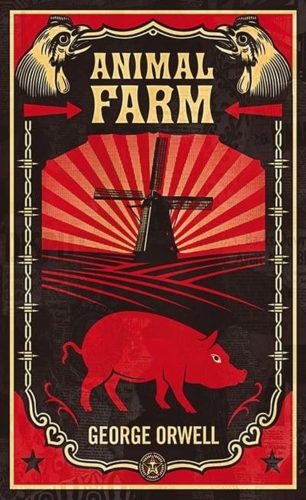
  • Cover of Animal Farm by George Orwell, published by Penguin

    George Orwell, born Eric Arthur Blair, was a British author and journalist best known for his sharp takes on politics, power, and society. You’ve probably heard of 1984, but Animal Farm is another of his most famous works, first published in 1945. On the surface, it’s a short fable about animals on a farm, but underneath, it’s a brilliant political allegory, mainly about the Russian Revolution and the rise of Stalin. Don’t let that scare you off, though, it’s surprisingly readable and still feels relevant today.


    The story takes place on Manor Farm, where the animals, fed up with their human owner, Mr. Jones, rebel and take over. Led by the pigs Napoleon and Snowball, they aim to create an equal and fair society. But as time passes, the pigs become more powerful, the rules keep changing (usually in the pigs’ favor), and the other animals work harder for less reward. Eventually, the pigs are just as bad as the humans, or maybe even worse. By the end, the hopeful revolution has crumbled into a grim, oppressive regime.

    👀 First Impressions
    Going into Animal Farm, I wasn’t sure how much I’d enjoy it, I half-expected it to feel stuffy or overly political. But I was pleasantly surprised by how quickly it pulled me in. The writing is sharp without being complicated, and the fable-like style makes it easy to follow. Even though I knew the general idea behind the story, I found myself eager to see how things would unfold. It’s one of those books that’s both an easy read and a thought-provoking one.

    ✅ What I Liked
    I loved how Orwell takes a big political idea and makes it easy to understand through a simple, almost fairy-tale-like story. The slow creep of corruption is so well done, you can feel things shifting bit by bit until suddenly, the farm looks nothing like the dream the animals started with. Characters like Boxer the horse really tug at your heart, and the final lines gave me chills. Plus, the themes about power, control, and manipulation still hit hard today.

    ❎ What I Like
    Honestly, there’s not much to complain about, but I will say that the story can feel a bit bleak and heavy-handed at times. Since it’s an allegory, the characters are more like symbols, so some moments don’t hit as emotionally as they could. And while it’s a short read, the dark turn the story takes might leave you feeling a little deflated by the end, it’s not exactly a “feel-good” book.

    💭 Final Thoughts
    Animal Farm is one of those classics that’s totally worth the hype. It’s short, punchy, and leaves a real impact. Whether you’re reading it as political commentary or just as a dark little fable, it’s a book that sticks with you. Definitely recommended if you’re in the mood for something thought-provoking but super readable.

    🛍️ Where to buy
    to purchase your own copy of Animal Farm, head to penuins website HERE for links

    Final Rating ★★★★★
    A timeless political allegory that’s deceptively simple, brilliantly written, and chillingly relevant no matter when you read it.

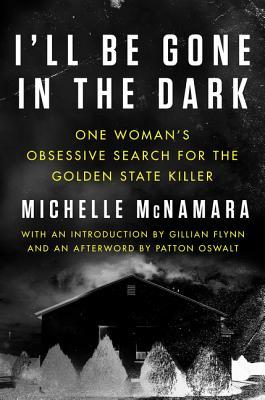
  • Cover of I’ll be gone in the dark by Michelle McNamara, published by Harper

    Michelle McNamara was an American true crime journalist and the creator of the popular blog True Crime Diary, where she chronicled cold cases and unsolved crimes. Her fascination with the Golden State Killer, a serial rapist and murderer who terrorised California in the 1970s and ’80s—became her life’s work. McNamara spent years researching the case, interviewing detectives, and poring over old files, determined to bring the elusive criminal to justice. Tragically, McNamara died suddenly in 2016 at the age of 46, before she could complete I’ll Be Gone in the Dark. Her husband, comedian Patton Oswalt, along with researchers Paul Haynes and Billy Jensen, helped complete the manuscript. The book was published posthumously in 2018 and became a bestseller, credited with helping renew public attention and investigative momentum that ultimately led to the arrest of Joseph James DeAngelo—the man identified as the Golden State Killer, later that year.

    👀 First impressions:
    From the opening pages, I’ll Be Gone in the Dark gripped me with its blend of true crime reporting and personal reflection. Michelle McNamara’s writing is sharp, intimate, and atmospheric. I expected a standard recounting of the Golden State Killer case, but instead found something far more layered and emotionally powerful.

    What I Liked:
    McNamara’s gift as a storyteller shines throughout the book. She balances meticulous investigative detail with deep compassion for the victims, never sensationalizing the crimes. Her ability to recreate the creeping fear that haunted California during the Golden State Killer’s reign is masterful. What sets this book apart is McNamara herself, her honesty about her obsession, the emotional toll of her research, and her fierce commitment to the truth. The fact that her colleagues lovingly pieced together her unfinished work adds an incredibly moving dimension, making the book feel like both a gripping true crime narrative and a tribute.

    What I didn’t Like:
    Honestly, I didn’t have any real criticisms of this book. As a true crime work, it’s gripping, well-researched, and emotionally resonant and as a True Crime fan I feel a connection with Michelle. While some might notice the shifts in tone due to it being completed after McNamara’s passing, I felt this only added to its poignancy and depth. For me, the book delivered everything I hoped for in a true crime read.

    📚 Why You Should Read This Book:
    If you’re drawn to true crime, investigative journalism, or stories about the human need for justice, this book is essential reading. It’s not just about the crimes or the criminal, it’s about the people affected, the obsession with finding the truth, and the long, often frustrating road toward justice. McNamara’s compassionate voice elevates it far above typical crime reporting, making it a book that lingers with you.

    💭 Final Thoughts:
    From the opening pages, I’ll Be Gone in the Dark gripped me with its blend of true crime reporting and personal reflection. Michelle McNamara’s writing is sharp, intimate, and atmospheric. I expected a standard recounting of the Golden State Killer case, but instead found something far more layered and emotionally powerful.

    🛍️ Where to buy
    To buy your own copy click HERE

    Final Rating ★★★★☆½
    A gripping and deeply personal true crime investigation, masterfully written with empathy, insight, and relentless curiosity.

  • Let me just say up front: I fully support therapy. Therapy is great! But sometimes… my bookshelf steps up first.

    When life gets overwhelming, I don’t always book a session. When I’m stressed, sad, confused, or just need to escape, I reach for a book. And honestly? My bookshelf is doing some serious emotional heavy lifting.

    Here’s why my bookshelf might just be better than a therapist (at least some days).

    Photo by Alicia Christin Gerald on Unsplash

    💸 1. It Doesn’t Charge £80 an Hour

    Sure, buying books adds up, but once they’re on the shelf? Unlimited access. No appointment fees, no invoices, no “we’re out-of-network.”
    Just me, my battered paperbacks, and free emotional support 24/7.

    🛋 2. It’s Always Available

    Middle of the night meltdown? Bad day at work? My bookshelf doesn’t care what time it is. It’s ready. I don’t need to wait three weeks for an opening or explain my life story. I just pull down a book, and bam! instant comfort.

    🎭 3. It Has Every Perspective

    Want advice on grief? Romance? Adventure? Want to escape into a fantasy world or dive deep into someone else’s heartbreak? My bookshelf has been through it all.
    Therapists specialize; books cover everything.

    💬 4. It Lets Me Ugly-Cry Without Judgment

    There’s no “how does that make you feel?”
    No polite nodding.
    No box of tissues handed over.

    My books just let me sob, laugh, or scream silently into a pillow without blinking. They get me.

    🎢 5. It’s an Emotional Rollercoaster — in a Good Way

    A therapy session is usually one focused, careful conversation.
    A book? It can take me on an emotional journey: heartbreak, hope, laughter, anger, catharsis — all in a few hundred pages.
    Sometimes, that’s exactly what I need.

    🛡 6. It Helps Me Escape, Not Just Analyze

    Therapy helps you process reality.
    Books help you run from it for a while.
    And honestly? Sometimes I just want to flee to a world of dragons, spies, or small-town romance. In these worlds, the biggest problem is “will they kiss or not?”

    🏆 Final Thoughts

    My bookshelf isn’t here to replace therapy but wow, it’s a pretty great backup team. It’s always waiting, always ready, and always knows exactly what story I need.

    💬 What book has been your best emotional lifeline? Drop your favourites in the comments — I’m always looking for more “therapists” to add to my shelf!